Japan’s “No-Tip” yet Top Tipping Nation|The Rise of Cashless Gratitude
CoCoRo編集部
CoCoRo

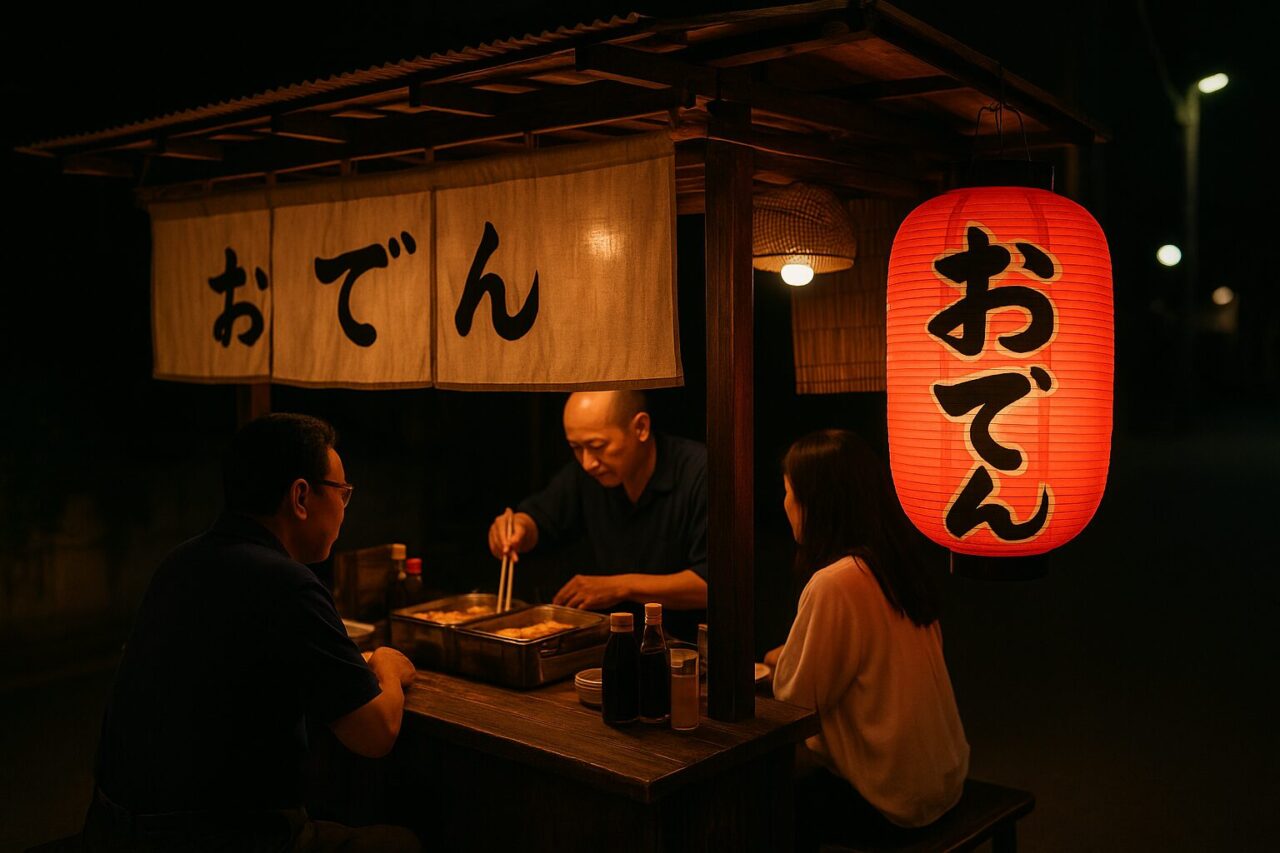
It has become increasingly rare to spot yatai—Japan’s traditional street stalls—in today’s urban landscapes. And yet, even people who have never really sat down at one still describe a faint sense of nostalgia when they see one. Tracing that feeling back, it seems to overlap slightly with an old image: travelers pausing beside a campfire, catching their breath before continuing their journey. A yatai is, of course, not the same as a campfire, but the structure—a place where people can stop for a moment and share a brief slice of time—may linger somewhere in our collective memory.
The appeal of a yatai is not defined solely by the taste of the food. Its charm lies in the freedom to step in without purpose, the semi-outdoor setting that is neither fully inside nor outside, the subtle distance managed by the stall owner, and the open, porous space where passersby naturally mix. These layers come together to form a cultural experience unique to yatai. In this article, we explore their history, their relationship with the modern city, and the quiet psychological comfort they continue to offer, aiming to understand their essence more clearly.
Most restaurants or bars require a purpose before you step inside—eating, drinking, taking a break. That expectation creates a subtle but real psychological threshold at the entrance. A yatai, however, does not ask for such reasons. You can stop in front of it without commitment, stand for a moment, look around, and only then decide whether to take a seat.
As cities grow more organized, every space tends to be assigned a clear function.
Yet yatai remain slightly outside that framework, occupying a rare, ambiguous zone that resists strict categorization.
This quality—a place you can enter without a purpose—seems to be a major part of why yatai feel so comfortable and easy to approach.
A yatai stands outdoors, yet it is not entirely an outdoor space.
The small roof, the noren curtains that soften the wind, the stools arranged around the counter, and the stall owner who anchors the atmosphere all create a sense of being quietly “inside.” At the same time, the sounds of the street and the night air flow through without obstruction, keeping it from becoming a fully enclosed setting.
This quality—a place that is neither wholly outside nor inside—allows people to enter naturally, easing tension without effort.
Such ambiguous spaces have become rare in modern cities, and the sense of comfort they create is part of what makes yatai feel so distinctive today.
The steam rising from the pot, the soft glow of a red lantern, and the quiet rhythm of simmering food create a kind of “warmth” that feels distinct from the air of the street around it. The way people gather around this small center of warmth can faintly evoke an older scene—travelers pausing around a campfire for a brief moment of rest.
This is not to equate a yatai with a campfire, of course.
But the shared elements—light, heat, and a subtle center that draws people in—seem to offer a sense of comfort that feels familiar across time.
The gentle, hard-to-explain ease people feel at a yatai may come from this quiet structure that invites warmth and presence without asking anything in return.
At a yatai, the presence of the stall owner becomes the quiet center that shapes the space.
The tone of their voice, the timing with which they serve dishes, and the casual exchanges with regular customers all help adjust the distance between strangers who sit side by side.
Because of this finely balanced interaction—neither overly attentive nor entirely hands-off—even first-time visitors often find themselves less tense when seated next to someone they have never met. The atmosphere settles naturally, allowing people to share a small, temporary moment without pressure.
A yatai naturally accommodates people whether they come alone or with others.
In fixed restaurants, the layout often creates a distinction between “spaces for solo diners” and “spaces for groups,” but at a yatai this boundary is pleasantly blurred.
Someone visiting alone can sit quietly and enjoy the atmosphere at their own pace, while a group can share a lively conversation just a seat or two away. A yatai is one of the rare spaces where both ways of spending time can comfortably coexist without interfering with each other.
At a yatai, brief conversations sometimes arise between people sitting side by side. There is no need for these exchanges to become anything deeper; even a few words shared in passing can gently ease someone’s mood at the end of the day.
As cities grow more convenient and efficient, such spontaneous moments tend to disappear.
Yet yatai still allow room for these small, unplanned connections—a kind of pleasant “extra space” that modern urban life often leaves behind.
The roots of yatai can be traced back to the Edo period, when mobile food vendors and yonaki soba—late-night noodle sellers—appeared on the streets.
These early forms of portable dining played a meaningful role in urban life at the time, offering quick meals to people on the move and filling the gaps between home, work, and the road.
In the years following World War II, yatai spread as a type of business that could be started relatively easily, even during times of material shortage.
As cities slowly regained their lights, these stalls became places where people gathered, shared meals, and reconnected with one another.
From the period of rapid economic growth onward, improvements in road infrastructure and stricter sanitation standards gradually reduced the number of yatai. As fixed restaurants increased and urban spaces became more orderly and purpose-defined, yatai—by nature somewhat ambiguous—found fewer places where they could comfortably exist.
In modern cities, running a food business on public roads requires meeting strict regulatory standards.
Sanitation management, sufficient operating space, and various safety requirements now often match those imposed on fixed restaurants, making it increasingly difficult for traditional yatai to continue operating in the same way.
As cities are redeveloped, each space becomes assigned to a clear function—roads remain roads, sidewalks become strictly pedestrian areas, and vacant lots turn into construction sites.
In this process, ambiguous spaces with no fixed purpose gradually disappear, and this shift in urban structure has played a significant role in the decline of yatai culture.
With the spread of convenience stores and chain restaurants, the need for a place to “get something warm late at night” can now be met elsewhere. This change has also reduced the necessity for yatai, contributing to their gradual disappearance from many urban areas.
Across Japan, there are regions with long histories of yatai, and even today, individual stalls can still be found in various cities.
However, when speaking about places where yatai remain part of the current urban culture, Fukuoka is the city most frequently mentioned.
Rather than calling Fukuoka “the only yatai city,”
it may be more accurate to say that Fukuoka is one of the few places where yatai have continued as a natural part of everyday life—a characterization that reflects the present situation more closely.
While many cities moved in the direction of reducing or eliminating yatai, Fukuoka took a different approach and gradually developed systems to help them continue. These efforts included:
Through the accumulation of these measures, yatai have remained woven into both daily life and the local tourism experience in Fukuoka.
In Fukuoka, yatai are used not only by visitors but also as an extension of everyday life for local residents.
This environment—where “a special experience” and “an ordinary night out” can comfortably coexist—seems to play a role in sustaining the city’s yatai culture.
A Sense of Cleanliness and Comfort
Street-food cultures around the world are vibrant and diverse, yet for some travelers, the differences in hygiene standards or surrounding environments can make the threshold to enter a bit high. Japanese yatai, by contrast, are often kept relatively clean and calm, which seems to make them easier for overseas visitors to approach and feel comfortable trying for the first time.
In Japan, it is not unusual for yatai to serve dishes that are close in quality to those of small specialty restaurants.
For visitors who associate street stalls with light snacks or simple meals, this level of quality can feel pleasantly unexpected.
Yatai often appear in anime, dramas, and films as part of a recognizable nighttime landscape. These scenes have traveled widely overseas, creating a cultural image of the yatai that is sometimes more familiar than the number of stalls that actually exist in Japan. This visual association seems to make the real experience feel both approachable and intriguing for many visitors.
As the number of yatai has decreased in modern cities, their presence has come to feel more meaningful. There is a tendency for things that are fading from everyday life to draw stronger emotional attention, and yatai may be shaped by this kind of cultural memory.
Through dramas, manga, and other media, yatai have become familiar to many people—even to those who have never sat at one. This shared cultural imagery often creates a sense of nostalgia that goes beyond personal experience.
The gentle light, rising steam, and people gathering around a small focal point can faintly resemble how travelers once rested beside a campfire.
While yatai and campfires are, of course, different things, this slight structural resemblance may be one reason why yatai feel quietly comforting and special.
A yatai is not only a place to enjoy food; it is also a small opening in the city—somewhere people can stop by without a clear reason. It is neither fully indoors nor outdoors, and it comfortably accommodates both individuals and groups. Such ambiguity allows small, chance connections to occur, making yatai increasingly valuable within highly organized urban environments.
As cities become more structured and convenient, these kinds of places gradually disappear. Even so, many people feel a quiet sense of comfort or nostalgia when they come across a yatai. Perhaps this is because a faint echo remains in our culture of the calmness travelers once felt when resting beside a campfire. The resemblance is only structural, but something about it seems to linger in the collective memory.
The hope that yatai will not vanish entirely may reflect the simple fact that some people still need this kind of “open space” in their everyday lives.