Japanese Convenience Stores: A Cultural Re-evaluation
CoCoRo編集部
CoCoRo

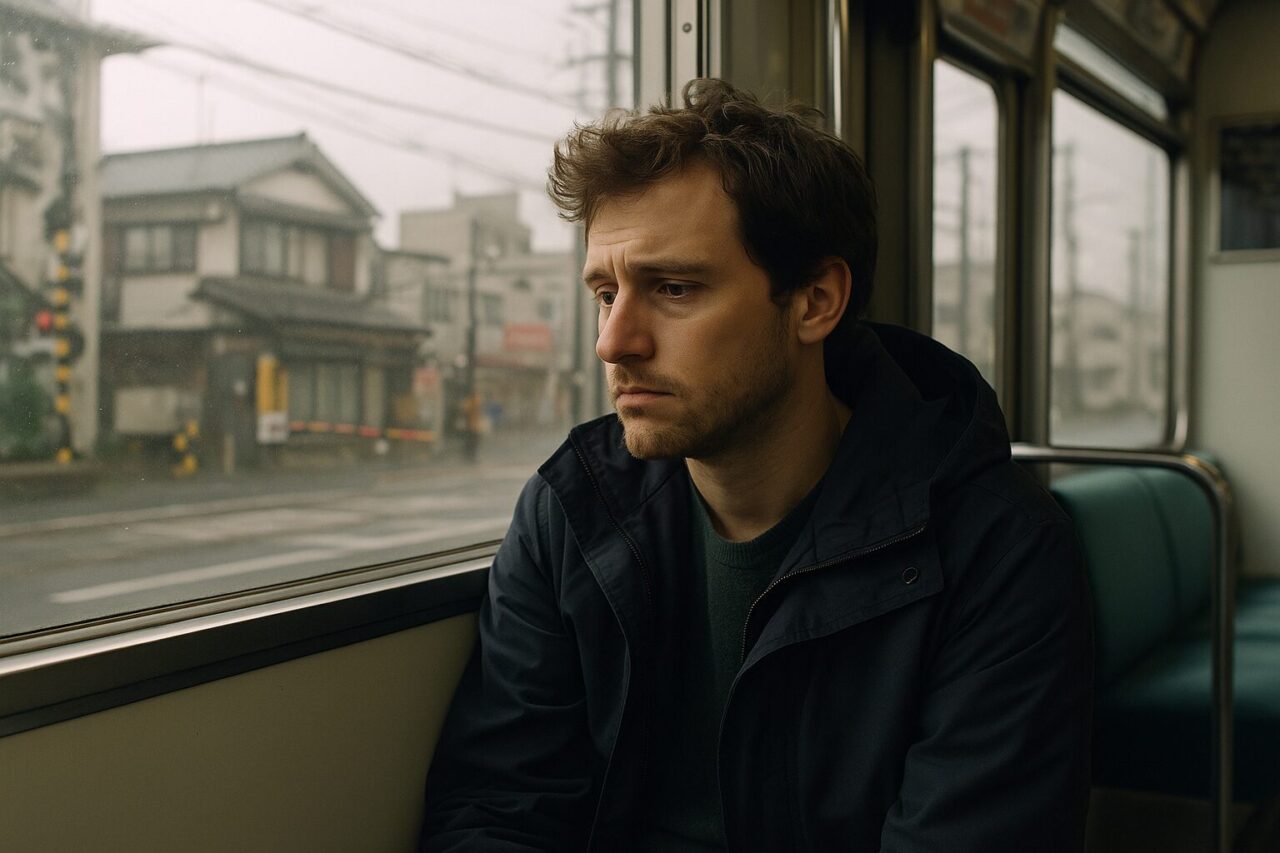
For some travelers, post-Japan depression begins before they even reach home.
They land at their home airport after a quiet, orderly departure from Japan. The signs feel less helpful. The restroom is not as clean. A staff member sounds impatient. The line seems chaotic. Within minutes, one thought appears: I want to go back to Japan.
Online, travelers describe this feeling as post-Japan depression, Japan blues, Japan withdrawal, or JPSD. They rewatch train videos, look for Japanese food, compare every public restroom with the ones they used in Japan, and begin planning another trip before unpacking.
What they miss is not limited to temples, cherry blossoms, Mount Fuji, or the neon streets of Tokyo. They miss trains arriving when expected, walking alone at night, finding a clean restroom, buying a drink from a vending machine, and entering a restaurant without worrying about tipping or negotiation.
That is what makes post-Japan depression feel different from ordinary post-vacation blues. Travelers do not only miss a destination. They miss a version of everyday life—and sometimes a version of themselves—that they briefly experienced in Japan.
Post-Japan depression is an informal name for the sadness, emotional flatness, or strong longing that some travelers experience after returning home from Japan.
It is not an officially recognized medical diagnosis. It is a phrase created and shared by travelers trying to describe a real emotional contrast: life in Japan felt unusually comfortable, stimulating, or freeing, and ordinary life after the trip now feels harder than it did before.
There is no single universally accepted name for this experience.
| Expression | Plain-English meaning | Typical nuance |
|---|---|---|
| Post-Japan Depression | Feeling low after leaving Japan | The most direct and searchable description |
| JPSD (Japan Post-Travel Syndrome) | A “syndrome” of missing Japan after a trip | An informal label used to group similar feelings and behaviors |
| PJD (Post-Japan Depression) | Post-Japan depression | A shortened form of the main phrase |
| Japan blues | Sadness after leaving Japan | Usually sounds lighter and less clinical |
| Missing Japan | Wanting to be back in Japan | A simple, natural expression of longing |
| Japan withdrawal | Feeling deprived of Japan | A playful comparison with withdrawal symptoms |
| Japan ruined me | Japan changed my standards so much that ordinary life no longer satisfies me | An exaggerated expression of having one’s old standards “ruined” |
| Don’t go to Japan | Do not go—you will not want to leave | A joking warning that is actually praise |
These expressions overlap. One traveler may say “I miss Japan,” while another describes the same emotional contrast as “Japan ruined me.” The difference is often one of tone, not a completely different experience.
The answer depends on what “real” means.
JPSD is not a separate disease with diagnostic criteria. But travelers really do report feeling unusually empty after Japan, thinking about the country every day, or finding their home environment more frustrating than before.
Common experiences include:
An informal label does not make the experience imaginary.
| Point of comparison | General post-vacation blues | Post-Japan depression |
|---|---|---|
| Destination | Can follow a trip anywhere | Specifically follows a trip to Japan |
| Emotional center | The holiday and freedom have ended | A comfortable version of everyday life has been lost |
| What is missed | Leisure, novelty, and time away from work | Japanese streets, food, transport, service, quietness, and safety |
| Returning home feels like | Going back to work or school | Returning to a life that now feels less convenient or more stressful |
| Common phrases | Post-vacation blues, post-travel blues | Post-Japan depression, Japan blues, JPSD |
Ordinary post-vacation sadness is part of JPSD. A traveler has left work and routine behind, enjoyed freedom, and then returned to responsibilities. But in post-Japan depression, people also miss the practical systems they used every day: trains, convenience stores, public restrooms, walkable streets, predictable service, and quiet public spaces.
The feeling is not only, “My vacation is over.” It is also, “For two weeks, everyday life worked differently—and now I have lost it.”
Post-Japan depression does not always begin several days after the trip. It can start at the first moment when Japan and home are placed side by side.
Imagine the transition. At a Japanese airport, the signs were clear, the restroom was clean, the queue moved predictably, and staff remained polite until departure. Hours later, the traveler lands at home and encounters a different tone of service, a confusing line, a dirty facility, or a long wait with little information.
Nothing catastrophic has happened. Yet the contrast can feel immediate and personal.
The home airport is often the first place where the temporary everyday life of Japan collides with the traveler’s old normal. Before nostalgia has time to develop, reverse culture shock has already begun.
International visitors often expect to remember famous temples, regional food, Mount Fuji, or Tokyo at night. They do remember those things. But the details that become painful after returning home are often much less dramatic.
The following table organizes a pattern commonly described in post-Japan travel stories: a seemingly ordinary experience produces surprise in Japan, then becomes a source of loss at home.
| What travelers experience in Japan | What surprises them during the trip | What feels lost after returning home |
|---|---|---|
| Trains arriving on time | The timetable can be trusted, including connections | Even short delays and long waits become more irritating |
| Clean public restrooms | A free public restroom can be remarkably clean and comfortable | Dirty restrooms—or the effort of finding one—feel harder to tolerate |
| Quiet public spaces | A huge city can still have quiet trains, stations, and residential streets | Loud conversations, calls, and general noise feel more exhausting |
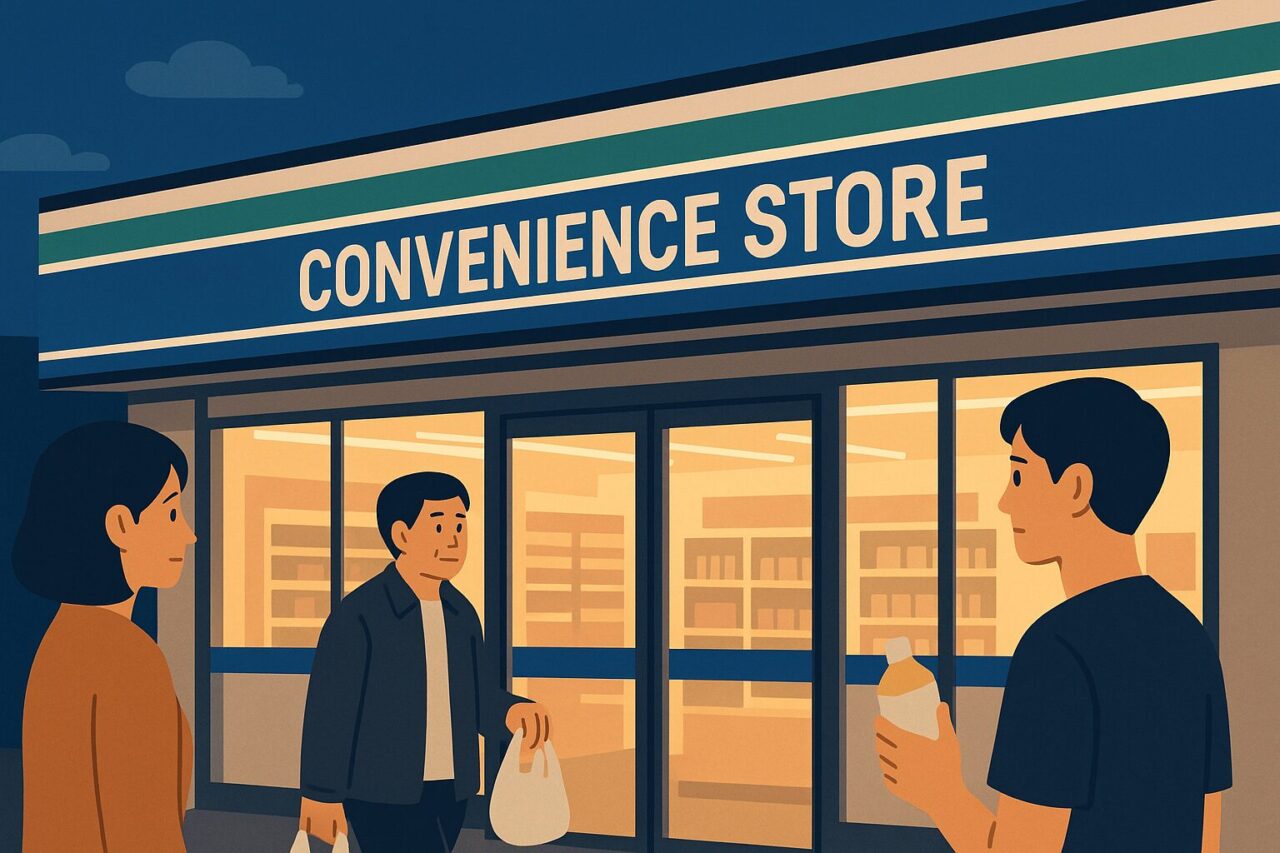
| Convenience stores and vending machines | Food, drinks, and essentials are available nearby, even late at night | Buying one drink or snack may require a long walk or a car trip |
| Polite service | Staff can be helpful without tipping, bargaining, or pressure | Large differences in service quality become tiring |
| Walking at night | Being able to walk alone after dark can feel astonishing | Losing the freedom to go out safely at night feels like a major restriction |
| Queues and public rules | Crowds can remain predictable because people follow the flow | Cutting in line and monitoring other people become stressful again |
| Lost-property culture | A wallet or phone may be returned rather than disappear | Returning to constant vigilance against theft feels mentally expensive |
| Affordable, reliable meals | A station restaurant or small shop can offer a satisfying meal at a reasonable price | It becomes difficult to find the same balance of price, quality, and convenience |
| Clean streets | Streets can remain clean despite the shortage of public trash cans | Litter and neglected public spaces become much more noticeable |
| A walking-based travel life | Simply walking through a neighborhood produces new discoveries | Returning to a car-dependent routine reduces movement, freedom, and daily novelty |
Post-Japan depression is not created by one enormous moment of pleasure. It can be created by hundreds of small moments in which nothing went wrong.
The train arrived. The restroom was usable. The clerk was courteous. The street felt safe. The instructions made sense. The wallet was still there.
During the trip, these moments merge into the background. After the trip, they disappear together.
The strongest souvenir may be a temple or a view of Mount Fuji. But what travelers unexpectedly grieve can be the station melody, the quiet train carriage, the late-night convenience store, or the freedom of an evening walk.
Japan’s public cleanliness is one of the most common examples of this contrast. Our article on why Japan feels so clean to international visitors explores why that impression can remain so powerful after the trip.
Vending machines are another part of Japan that can seem trivial until they are gone. The article on why Japan’s vending machines are declining also explains why the machines remain so closely tied to everyday convenience.
Post-Japan depression, “Japan ruined me,” and “Don’t go to Japan” describe related feelings from different directions.
JPSD is inward-facing. The traveler misses Japan and wants to return. It is the sadness of separation from a place, a lifestyle, and a version of daily life.
“Japan ruined me” is stronger than saying that Japan became a new standard.
The word ruined suggests that the traveler’s old standard of satisfaction has been broken. Public transportation that once seemed acceptable now feels unreliable. A normal restroom now looks dirty. A familiar service interaction now feels unnecessarily tense. The traveler cannot look at the old normal in the same way.
It is usually exaggerated and humorous, not a literal claim that Japan destroyed someone’s life. The underlying meaning is:
Japan showed me a version of everyday life that made my previous expectations impossible to restore.
“Don’t go to Japan” often sounds negative only when removed from context. In travel videos and comments, it usually means: “Do not go unless you are prepared to fall in love with it, struggle to leave, and keep comparing home with Japan.”
Post-Japan depression is the loss. “Japan ruined me” is the change in standards. “Don’t go to Japan” turns that change into a joking warning for the next traveler.
Saying “Japan is wonderful” does not fully explain JPSD. Several processes can overlap: recovery from ordinary stress, reduced social friction, a less active threat response, repeated small rewards, changes in food and movement, and attachment to the person one became during the trip.
Travel separates people from work, chores, commuting, and familiar social roles. Days are organized around curiosity rather than obligation.
A 2025 meta-analysis of 32 studies on vacations and employee well-being found that vacations had a large positive effect on well-being and that the effect did not disappear as quickly as earlier research had suggested. Psychological detachment from work and physical activity were among the experiences associated with stronger recovery.
Japan travel often contains both. Visitors are away from work and may walk far more than they do at home. They encounter new food, streets, sounds, and decisions every day. Returning home means losing not only Japan, but also the recovered and active state created by the vacation itself.
Many visitors are surprised by how often an ordinary interaction ends without conflict.
Queues are understandable. Prices are usually fixed. Staff do not pressure customers for tips. A train carriage can remain quiet. Instructions often make the next step visible. A person can enter a shop, ask a question, or make a mistake without every interaction becoming a negotiation.
Each event seems minor. Together, they reduce the emotional energy needed to move through a day.
This may be why some travelers feel that they could “simply exist” in Japan. They were not receiving special treatment at every moment. They may have been using less mental energy to avoid conflict, defend their position, or predict how another person would respond.
Neuroscience offers one way to understand this feeling.
The brain continuously monitors the environment for danger. The amygdala is involved in detecting threats and assigning emotional importance to sudden sounds, unfamiliar expressions, and unpredictable behavior. When a person expects conflict, theft, aggression, or danger, the sympathetic nervous system helps keep the body ready to respond. The stress hormone cortisol is also involved in this broader stress response.
If a traveler feels safe walking at night, finds public behavior predictable, and repeatedly completes ordinary tasks without confrontation, that alert state may ease. The body may move more easily toward the rest-and-recovery functions associated with the parasympathetic nervous system.
Japan also provides repeated moments in which expectations are met: the train comes, the directions work, the restroom is clean, the staff member helps, and the walk ends safely. The brain’s reward system, including processes involving dopamine, helps people learn from rewards, form expectations, and seek experiences that felt satisfying.
No one has demonstrated that every traveler’s amygdala becomes less active in Japan. But the combination of lower perceived threat and repeated successful experiences offers a plausible neuroscientific explanation for the feeling that “my brain finally relaxed.”
The comfort of a Japan trip does not require every meal, train, restroom, and hotel to be the best in the world. Consistency matters.
A small restaurant may still provide a satisfying meal. A convenience store can solve several problems at once. The payment process is usually predictable. Public transport usually follows an understandable system. Cleanliness and order often continue outside the major tourist attractions.
Other trips may be remembered for spectacular landscapes or intense urban excitement. Japan can combine those extraordinary experiences with a relatively comfortable ordinary day. The traveler does not only enjoy the attraction; the time between attractions also works.
That low risk of a day-ruining “miss” can become visible only after returning home.
Home does not suddenly become worse when the traveler lands. The comparison has changed.
Before Japan, a delayed train, a difficult restroom, or an inconvenient shopping trip may have felt normal. After experiencing another system every day, the traveler evaluates the old routine against a new reference point.
Your home did not become less convenient overnight. Japan made inconveniences visible that you had stopped noticing.
This is the psychological change behind “Japan ruined me.” The traveler has not simply collected good memories. The trip has changed the standard used to judge ordinary life.
During a Japan trip, a person may walk every day, explore unfamiliar streets, eat with curiosity, and decide how to spend each hour. Work roles and familiar expectations are temporarily distant.
Back home, the traveler may say, “I miss Japan,” but part of the feeling may be more personal.
They miss being energetic enough to walk all day. They miss noticing small details. They miss spending time alone without feeling lonely. They miss the version of themselves who was curious, independent, and fully present.
Part of “I want to go back to Japan” may mean “I want to go back to the person I was in Japan.”
That is one of the deepest reasons JPSD can feel more intense than missing a collection of tourist sites.
Some travelers say that they felt physically lighter in Japan, even while eating enthusiastically.
Japan certainly has ramen, fried food, sweets, and alcohol. Yet compared with a traveler’s normal diet at home, it may also be easier to choose grilled fish, soba, tofu, vegetables, seaweed, soup, rice portions, and several small dishes. Fermented foods such as miso, natto, and pickles are common, while dashi and umami can create satisfying flavor without relying only on heavy fat or intense sweetness.
Research increasingly examines the gut-brain axis—the two-way relationship among food, gut microbes, the nervous system, and mood. In a 28-day randomized trial comparing a 1975-style Japanese diet with a modern Japanese diet, researchers observed changes in several groups of gut bacteria among participants eating the 1975-style diet.
Food is not the only reason someone may feel better in Japan. Walking, bathing, sleep, freedom from work, and the excitement of travel all matter. But if a traveler felt better both emotionally and physically, returning to an old diet and routine can create another layer of loss.
They may not only miss the taste of Japanese food. They may miss the body they inhabited while eating, walking, and sleeping in Japan.
JPSD does not look the same for everyone. Travelers describe sadness, irritability, emotional flatness, and an urgent desire to return.
Tears can come from several feelings at once: an important experience has ended, Japan feels far away, the body is exhausted from travel, and work or school is waiting.
Crying does not automatically mean that something is seriously wrong. It may be the moment when the body relaxes and the traveler finally realizes that a long-awaited experience is over.
In Japan, every day may include a new station, meal, neighborhood, sound, or discovery. Back home, familiar routines can feel colorless by comparison.
This can be especially strong when the Japan trip was a major goal for months or years. Once it ends, the traveler loses not only daily novelty but also the future event they had been anticipating.
Noise, delays, litter, service differences, and social friction existed before the trip. Japan provides a new comparison, so those old frustrations can suddenly demand more attention.
The home country did not change. The traveler’s sensitivity and expectations did.
Some travelers return believing that Japan is their “real home.” This can reflect attachment to the environment, but also attachment to the self they experienced there: calmer, more curious, more active, and less defensive.
The feeling does not necessarily mean that living and working in Japan would reproduce a vacation. It does reveal which conditions allowed that traveler to feel at ease.
Searching flights, saving locations, learning Japanese, and planning another season can become ways of maintaining contact with the experience.
Japan also resists feeling “finished.” A first trip may cover Tokyo, Kyoto, and Osaka, while leaving different regions, seasons, festivals, food cultures, and ordinary neighborhoods unexplored. Returning can expand curiosity rather than satisfy it.
There is no standard duration. Some people readjust within days. Others think about Japan intensely for weeks. Some continue loving Japan for years and return repeatedly.
Long-term affection for Japan is not the same as long-term inability to function. A trip can remain emotionally important without being a continuing mental-health problem.
When Japanese people first hear about post-Japan depression, many have a reasonable reaction:
“Doesn’t everyone feel sad after a good vacation?”
Part of JPSD is ordinary post-vacation sadness. The traveler has left freedom and novelty behind and returned to work, school, and responsibility.
What may be less obvious to a Japanese reader is that travelers are not only missing the holiday. They are missing trains, restrooms, convenience stores, quiet streets, predictable service, and the ability to walk at night. Elements of Japanese daily life became part of the travel experience.
General post-vacation blues say, “My holiday ended.” JPSD can also say, “A version of everyday life that felt easier has ended.”
A train arriving on time is not a tourist attraction to a Japanese commuter. Neither is a convenience store, a station sign, a public restroom, or a quiet queue.
People naturally stop noticing systems that surround them every day. International travelers temporarily experience those systems as something new, then notice their absence at home.
People living in Japan know about crowded commutes, workplace pressure, bureaucracy, housing, natural disasters, rising prices, and complex social expectations. A tourist usually does not experience Japan through those responsibilities.
This does not make the traveler’s comfort false. The tourist and the resident are encountering the same country from different positions and over different lengths of time.
For Japanese readers, JPSD can reveal the value of systems that have become invisible through familiarity: reliable transport, maintained public space, predictable service, and everyday cooperation.
Coping with JPSD does not mean forcing yourself to forget Japan. It means allowing the trip to become part of your life while adjusting to the environment you actually returned to.
Long flights, time differences, poor sleep, and disrupted meals can intensify emotional flatness. If possible, leave some space between arrival and the first full day of work or school.
Unpack, sleep, eat normally, and let the body leave travel mode before deciding that home has become unbearable.
Choose photographs, write a travel journal, edit a short video, map the places you visited, or tell someone the story of the trip.
This does not erase longing. It helps transform a trip that feels abruptly taken away into an experience that now belongs to you.
Cook a meal you discovered, continue learning Japanese, use a cup or bowl you bought, watch a film, or learn more about a region you visited.
Even something as ordinary as visiting an Asian supermarket or recreating a convenience-store breakfast can turn passive nostalgia into an active relationship with the culture.
Japan’s convenience stores are often among the most unexpected things travelers miss. Our article on how Japanese convenience stores shape everyday convenience looks more closely at why they leave such a strong impression.
Advice to “keep doing what you did in Japan” is not always realistic.
A traveler may have walked all day in Japan but live in a car-dependent suburb without sidewalks. They may have walked alone at night in Tokyo but cannot safely do so at home. An individual cannot recreate punctual trains, nearby convenience stores, clean public restrooms, or the freedom of a safe evening walk through personal motivation.
Some parts of the Japan experience can travel home: food, language, curiosity, time alone, or the habit of exploring somewhere new. Other parts belong to the environment and cannot be reproduced individually.
Some parts of JPSD can be softened by changing daily habits. Other parts can only be recovered by returning to Japan.
Recognizing the difference is more honest than treating every loss as a personal failure to “adjust.”
List places you want to revisit, choose a new region or season, set a savings goal, or continue learning enough Japanese to change the next experience.
The next trip does not need to be soon. Giving it a shape can turn an undefined sense of loss into anticipation.
If low mood, insomnia, appetite changes, or inability to enjoy anything continue and seriously interfere with everyday life, do not assume that travel sadness is the only cause. Consider speaking with a qualified health professional or an appropriate local support service.
Post-Japan depression is more than sadness that a good holiday ended.
It can be the sudden loss of punctual trains, clean restrooms, quiet streets, polite service, late-night convenience, and the freedom to walk. Hundreds of small moments in which nothing went wrong created a version of daily life that felt unusually light.
And the traveler may miss more than Japan itself. They may miss walking every day, noticing everything, choosing each destination, feeling safe enough to relax, and being curious from morning until night.
Part of “I want to go back to Japan” may mean “I want to go back to the person I was in Japan.”
Some parts of that person can return home. Others are inseparable from the place. That tension—not simply a love of tourist attractions—is at the heart of JPSD.
Post-Japan depression is an informal name for sadness, emotional flatness, or strong longing after returning from Japan. Travelers may miss Japanese food, transport, streets, service, safety, or the version of themselves they experienced during the trip.
JPSD stands for Japan Post-Travel Syndrome. It is an informal phrase used online to describe feelings and behaviors associated with missing Japan after a trip.
Travelers genuinely report strong sadness and longing after leaving Japan. Post-Japan depression is not an official diagnosis, but the emotional contrast described by travelers is real.
Post-vacation blues mainly involve missing freedom, novelty, and time away from responsibility. JPSD can also involve missing a version of everyday life experienced in Japan, including transport, cleanliness, service, walkability, and safety.
The end of an important trip, longing for Japan, travel exhaustion, time-zone changes, and the return to work or school can combine. Tears may appear when the traveler finally has time to process the ending.
Some travelers readjust within days, while others miss Japan intensely for weeks. Loving Japan and returning repeatedly for years is different from an ongoing inability to function in everyday life.
Recover from travel fatigue, organize photographs and memories, maintain a connection through food or language, identify what you truly miss, and give a possible future trip a shape. Accept that some parts of the Japan experience cannot be recreated at home.
It usually means that Japan changed a traveler’s standards so strongly that their previous normal no longer feels satisfying. It is generally humorous exaggeration, not a literal statement that Japan destroyed their life.