What Is Shokibarai? Japan’s Summer Custom for Beating Heat with Food, Drinks, and Gatherings
CoCoRo編集部
CoCoRo

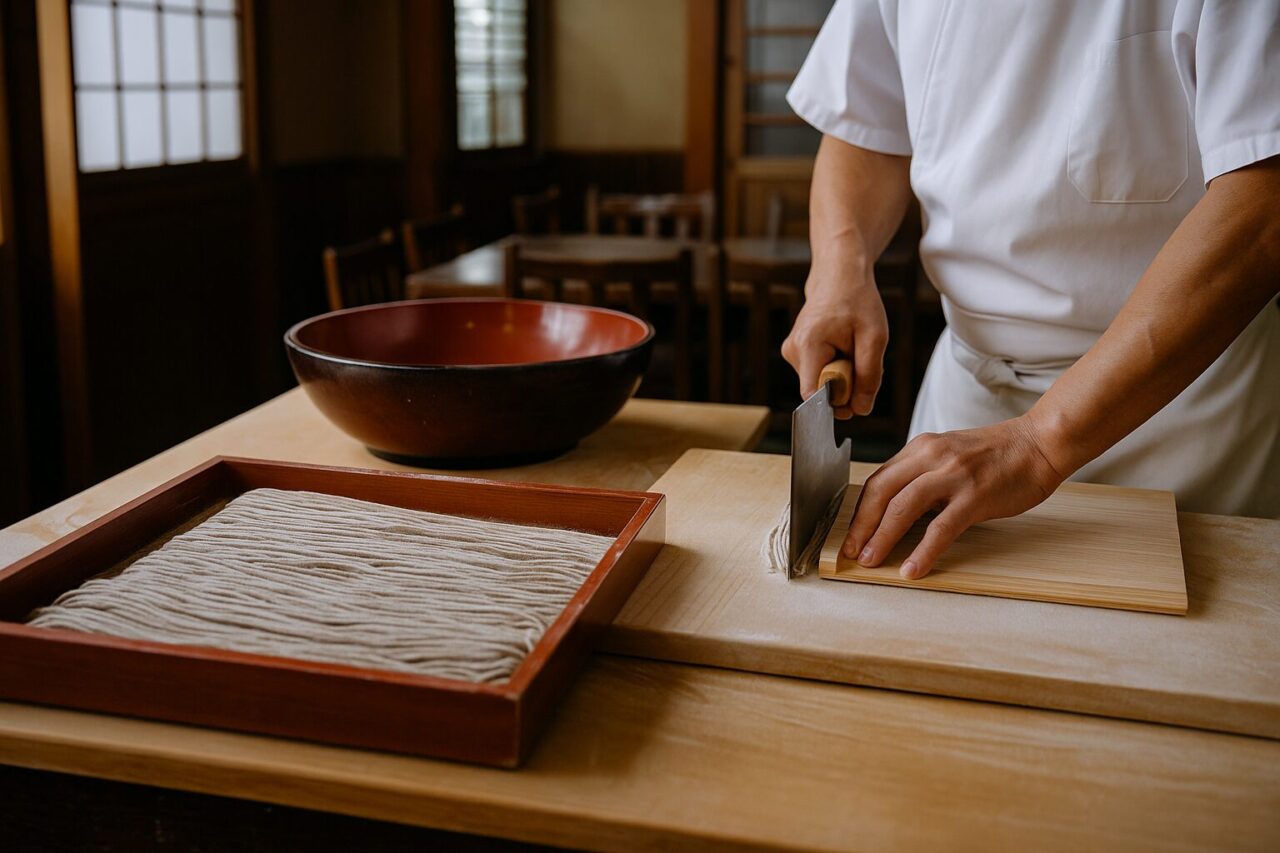
Soba is a Japanese noodle dish made with buckwheat flour.
In Japan, soba appears in many familiar forms: cold zaru soba dipped into sauce, hot kake soba served in broth, Toshikoshi soba eaten at the end of the year, and quick standing soba at train stations and street-corner shops. For many Japanese people, soba is an ordinary part of everyday life.
For many visitors from overseas, however, soba is not just another noodle dish.
It is a food built around aroma.
It can be served cold and dipped into a small cup of sauce.
It is often eaten by slurping.
At the end of the meal, people may drink sobayu, the water used to boil the noodles.
And before it ever reaches the table, soba may be handmade by a craftsperson using only flour and water.
Each of these details may feel ordinary in Japan, but they can be surprising from the outside.
This article explains what soba is, why overseas reactions to Japanese soba are often so strong, how soba culture developed in Edo-period Japan, and why aroma, soba-making, Toshikoshi soba, sobayu, and soba-mae all reveal the depth of Japanese food culture.
Soba is a Japanese noodle dish made mainly from buckwheat flour.
Some soba is made entirely from buckwheat flour and is called juwari soba. Other soba, such as nihachi soba, mixes buckwheat flour with wheat flour to make the noodles easier to handle and give them a smoother texture. In general, soba is enjoyed for its buckwheat aroma, thin noodle texture, and harmony with tsuyu dipping sauce or broth.
In Japan, soba can be both refined and casual.
You might eat handmade soba slowly at a specialist restaurant, paying attention to fragrance and texture. Or you might eat a quick bowl of standing soba at a station in just a few minutes before catching a train.
This wide range is one of the defining features of Japanese soba culture.
Soba, udon, and ramen are all beloved noodle dishes in Japan.
But the center of enjoyment is different.
Soba is about the aroma of buckwheat flour and its balance with tsuyu. Udon is loved for its chewy wheat texture and gentle dashi flavor. Ramen creates satisfaction through soup, oil, toppings, and a stronger design of flavor.
| Noodle dish | Main ingredients | What people mainly enjoy |
|---|---|---|
| Soba | Buckwheat flour, sometimes wheat flour | Aroma, smoothness, balance with tsuyu |
| Udon | Wheat flour | Chewiness, dashi, regional texture |
| Ramen | Wheat flour | Soup, oil, toppings, rich flavor design |
When visitors compare soba with ramen, soba can seem much quieter. Yet that quietness is exactly what makes soba distinctive.
For more on another Japanese noodle culture built around flour, water, texture, and dashi, see Udon Culture in Japan: History, Varieties, and Local Wisdom.
One common overseas reaction to soba is surprise that it is so different from the noodle dishes people expected.
Soba is not eaten in a rich soup like ramen. It is not coated in sauce like pasta. In zaru soba or mori soba, cold noodles are dipped into a small amount of tsuyu, and the diner pays attention to aroma, texture, and the clean finish of the noodles.
That way of eating can feel new to people encountering soba for the first time.
The most surprising thing about soba is often its aroma.
In many noodle dishes, soup, sauce, or toppings take the leading role. With soba, however, the fragrance of the noodle itself matters deeply.
Buckwheat can have a toasted, earthy, slightly nutty aroma. These flavors are not loud. For first-time diners, that can make soba difficult to understand at first. Some may wonder what exactly they are supposed to taste.
But once attention turns toward the fragrance, soba becomes a much deeper dish.
The Japanese feeling that “soba is a food you taste through aroma” is not always explained clearly in everyday life. Overseas reactions make that quiet feature easier to see.
Zaru soba and mori soba are eaten by dipping cold noodles into tsuyu.
This feels natural to many Japanese people, but it may seem unusual to visitors from countries where noodles are usually served in hot soup or mixed with sauce.
The noodles and dipping sauce are separate.
How much should you dip?
When should you add the condiments?
Should wasabi be mixed into the sauce, or placed directly on the noodles?
These small questions are part of soba culture. Soba is simple, but the way of eating it has many quiet details.
In Japan, people often slurp soba noodles.
In many regions outside Japan, making noise while eating can be considered poor manners, so slurping may surprise visitors.
In the case of soba, however, slurping has a purpose. Taking the noodles into the mouth with air helps the aroma rise. With hot soba, it can also help cool the noodles slightly as they are eaten.
Of course, no one has to make a loud sound on purpose. But the culture of slurping soba is connected to the physical act of tasting aroma and texture together.
Sobayu is another part of soba culture that often draws attention from overseas visitors.
Sobayu is the hot water used to boil soba noodles. After finishing zaru soba or mori soba, people pour sobayu into the remaining tsuyu and drink it.
In many food cultures, noodle boiling water is not served at the end of the meal. So sobayu can seem unusual at first.
Yet sobayu carries the gentle aroma and slight thickness of buckwheat. It softens the tsuyu and brings the meal to a quiet close.
Sobayu is a way of tasting soba until the very end. Even after the noodles are gone, the fragrance remains.
Soba is not a dish that pushes flavor with intensity.
Its satisfaction comes from the fragrance of buckwheat flour, the umami of tsuyu, the freshness of condiments, and the smoothness of the noodles.
The aroma of soba is delicate. It rises just after boiling and gradually fades with time. That is why soba makers value noodles that are freshly made and freshly boiled.
This fragility is part of soba’s beauty.
The aroma of soba changes depending on the buckwheat flour.
Region, climate, water, soil, and the way the buckwheat is milled can all affect the character of the fragrance.
For example, soba from Nagano is often associated with a light, approachable flavor. Fukui soba is sometimes described as more strongly aromatic. Hokkaido is known as a major buckwheat-growing region, and many of its soba noodles have a clean, fresh impression.
Milling also matters.
Hikigurumi, which uses more of the buckwheat grain, tends to bring out stronger aroma. Sarashina soba, which is pale and refined, often has a gentler fragrance and emphasizes smoothness and elegance.
Even within soba, there is no single expression of aroma.
The aroma of the noodles is central to soba, but tsuyu is also essential.
Tsuyu is usually made with dashi, soy sauce, mirin, and other seasonings. If the tsuyu is too strong, it can hide the fragrance of the soba. If it is too weak, the flavor may feel vague.
Good soba depends on the balance between buckwheat noodles and tsuyu.
For a broader explanation of Japanese dashi culture, see What Is Dashi? The Japanese Soup Stock That Defines Umami. Soba tsuyu is one of the flavors shaped by Japan’s dashi culture.
Soba spread widely in a form close to today’s noodle dish during the Edo period.
In Edo, eating out became part of urban life. Soba was easy for ordinary people to eat because it was quick, light, and suited to breaks between work or travel.
Soba-kiri refers to buckwheat dough rolled out thinly and cut into noodles.
Before this style became widespread, buckwheat was also eaten in forms such as sobagaki, a simple dumpling-like preparation made by mixing buckwheat flour with hot water.
As soba became a noodle dish, new ways of eating it developed: dipping it in tsuyu, slurping it, and serving it at food stalls.
Soba had a lightness different from rice-based meals. That lightness matched the rhythm of Edo’s urban life.
Yonaki soba was soba sold from mobile food stalls at night.
The sellers made sounds to let customers know they were nearby, which is one reason the term yonaki soba, or “night-crying soba,” became associated with the practice.
In Edo, quick soba at night was an important meal for unmarried men, craftspeople, and people working late.
In a modern sense, it may have occupied a place somewhat like late-night ramen or instant noodles. Yet yonaki soba also carries the atmosphere of Edo’s streets and its eating-out culture.
The spirit of Edo soba culture can still be felt in modern standing soba shops.
At train stations or in city neighborhoods, people can eat soba quickly without lingering. They enter, eat, and move on.
This lightness is an important part of soba culture.
To visitors from overseas, standing soba may look like Japanese fast food. But beneath that speed is a food culture that has valued being quick, light, and somehow stylish since the Edo period.
Buckwheat itself is not unique to Japan.
Buckwheat flour has been used in many parts of the world, including French galettes, Russian and Eastern European buckwheat dishes, Korean cold noodles, and other buckwheat-based foods.
What is distinctive in Japan is the way buckwheat was shaped into thin noodles and developed together with tsuyu, condiments, sobayu, soba-mae, Toshikoshi soba, and the craft of soba-making.
In other words, buckwheat exists around the world.
But Japanese soba culture developed into a particularly Japanese form.
One well-known buckwheat dish outside Japan is the French galette.
A galette brings out the toasty aroma of buckwheat by cooking it on a hot surface. It is often paired with butter, egg, cheese, ham, or other ingredients that highlight the nutty character of buckwheat.
Japanese soba, by contrast, brings out a more transparent aroma by boiling the noodles. Rather than emphasizing toasted richness, it values a clean fragrance, thin texture, and the balance between noodles and tsuyu.
The same buckwheat flour can lead to very different food cultures.
One reason foreign visitors are fascinated by soba is soba-making itself.
Soba-making involves mixing flour and water, kneading the dough, rolling it out, folding it, and cutting it into noodles. The ingredients look extremely simple. But humidity, temperature, the amount of water, and the pressure of the hands can all change the result.
The difficulty of soba-making lies in how few ingredients there are.
There is little room to hide mistakes. The condition of the flour, the way water is added, the strength of kneading, the thickness of the dough, and the width of the cut all affect aroma and texture.
To visitors watching from outside the tradition, soba-making can look less like ordinary cooking and more like craft.
The movements are quiet. The tools are beautiful. The process has little waste.
Soba-making uses specialized tools such as a kneading bowl, rolling pins, a soba knife, and a guide board.
The tools themselves have a quiet beauty, and they work together with the movements of the maker’s body. Rolling the dough evenly, folding it neatly, and cutting consistent noodles require skill that can be seen even before the soba is eaten.
Soba is a food that communicates culture before it reaches the mouth.
Soba culture is connected not only to eating methods, but also to seasonal events and the way people spend time.
Three examples show this especially well: Toshikoshi soba, sobayu, and soba-mae.
Toshikoshi soba is soba eaten on New Year’s Eve.
Several meanings have been attached to the custom. The long, thin noodles are associated with longevity and family fortune. Because soba breaks more easily than some other noodles, it has also been linked to the idea of cutting away the hardships or misfortunes of the old year.
For Japanese people, Toshikoshi soba is not just dinner on December 31.
It is a quiet food for marking the end of the year.
This custom shows that soba is both an everyday food and a ritual food.
Soba-mae refers to the custom of enjoying sake and small dishes before eating soba.
In Edo-period soba shops, people might drink sake with small dishes such as itawasa, grilled nori, tempura, or dashimaki tamago before finishing with soba.
For visitors from overseas, this can feel like a culture of enjoying the time before the noodles.
A soba shop was not only a place to eat noodles. It could also be a place to settle into a short, quiet moment.
Sobayu allows the fragrance of soba to return at the end of the meal.
When sobayu is poured into the remaining tsuyu, the flavor softens and the aroma of buckwheat comes forward again. It is less like an ordinary drink and more like the aftertaste of the meal made visible.
Foreign visitors may be surprised by sobayu not only because it is noodle-boiling water, but because it shows a way of valuing aroma even after the main food has been eaten.
Soba is a Japanese noodle dish made with buckwheat flour.
But soba culture is more than that. It includes aroma, tsuyu, the physical act of slurping, sobayu, soba-mae, yonaki soba, Toshikoshi soba, and the craft of handmade noodles.
Buckwheat exists in many parts of the world.
Yet Japan developed soba into a culture where fragrance, eating style, time, and craftsmanship come together.
Visitors are not surprised by soba simply because it is an unfamiliar noodle.
They are surprised because this quiet dish contains history, technique, and a particular Japanese sense of beauty.
Soba is an everyday food in Japan, but it is also a food culture of aroma that Japan can share with the world.