Is Origami Japanese? Its Meaning, History, and Global Evolution
CoCoRo編集部
CoCoRo

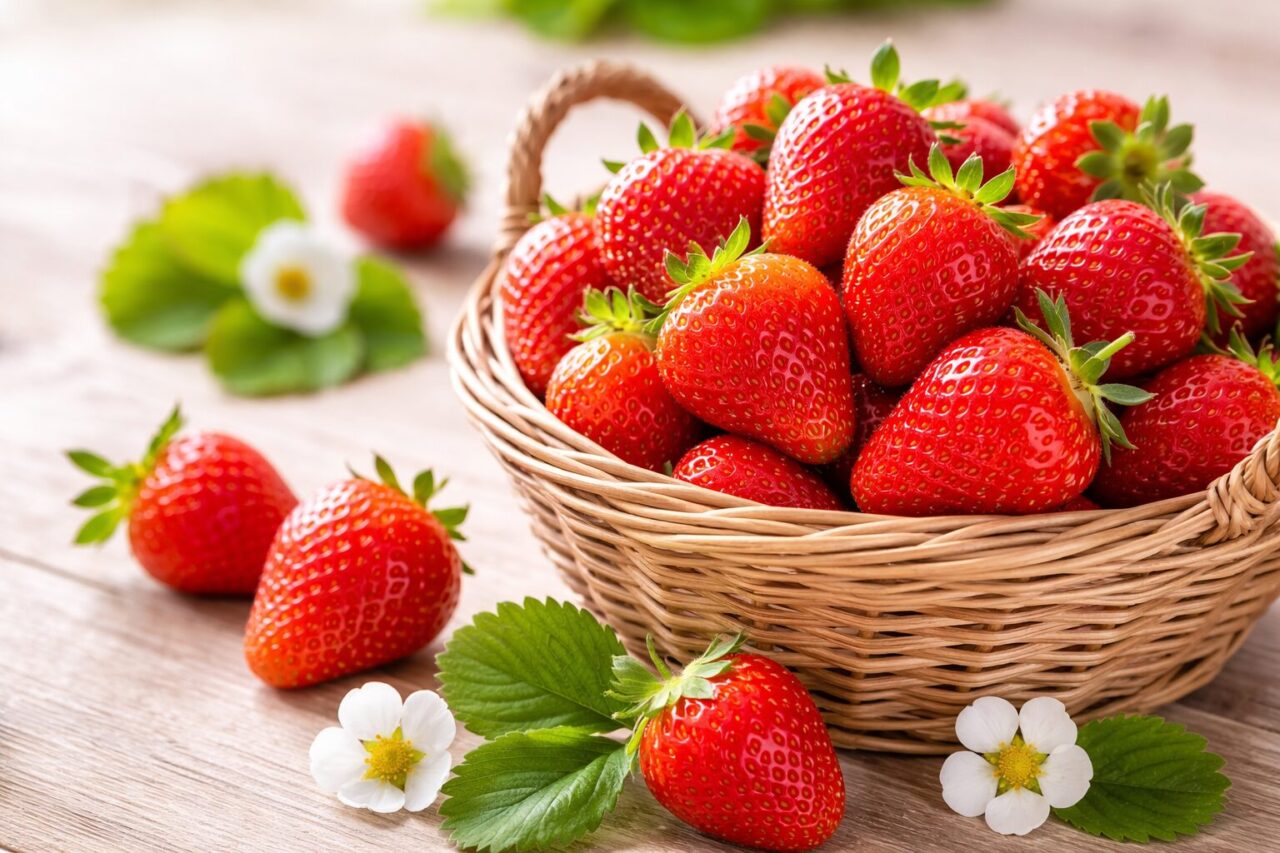
From winter to spring, strawberries appear naturally on Japanese tables.
They are sold in supermarkets, placed on cakes, and picked at strawberry farms during family outings. In Japan today, strawberries are a fruit that hardly needs explaining.
But if you pause for a moment, this is a little strange.
Strawberries are not an ancient Japanese fruit. They are not like persimmons or mandarins, which have been rooted in Japanese daily life for a much longer time. Yet today, strawberries feel as if they have always belonged in Japan.
So when did strawberries come to Japan, and when did they become part of everyday life?
This article explains when strawberries were introduced to Japan, when full-scale cultivation began, why they became common from the late Showa period (1926-1989) into the Heisei period (1989-2019), why Japanese strawberries are so sweet, and how people overseas react to them.
Strawberries are generally said to have reached Japan in the late Edo period (1603-1868).
However, that does not mean people in Japan were already eating strawberries in the way they do today. The Western strawberries that entered Japan at that time were closer to unusual plants than everyday fruit. They were likely treated as rare, ornamental, or experimental plants rather than as something widely sold for eating.
In other words, strawberries existed in Japan by the late Edo period (1603-1868), but they were not yet a fruit that ordinary people naturally had in daily life.
Western strawberries introduced to Japan were called Oranda ichigo.
In that period, things that came through Western contact were sometimes associated with the word Oranda, meaning Dutch. The name Oranda ichigo reflects that historical context.
This does not mean that modern cultivated strawberries originally came from the Netherlands. The strawberries widely grown today are based on cultivated lines that came from crosses between North American and South American wild strawberry species.
In Japan, strawberries were first received as a new fruit from the West. Later, through breeding and cultivation techniques, Japan developed its own culture of sweet, beautiful strawberries.
Full-scale strawberry cultivation in Japan developed after the Meiji period (1868-1912).
Even though strawberries had arrived in the late Edo period (1603-1868), they were fragile and difficult to distribute. Production was limited, and they were not something anyone could easily buy.
During the Meiji period (1868-1912), Western agricultural knowledge and growing techniques entered Japan. Strawberry cultivation gradually spread through cities, experimental farms, and agricultural research sites.
Even then, from the Meiji period into the early Showa period (1926-1989), strawberries were closer to a luxury fruit.
Japan was not yet in the age when supermarket shelves would fill with packs of strawberries every winter and spring. Strawberries existed, but they were not yet a normal part of the household table.
It is easiest to understand the spread of strawberries in Japan by seeing it as something that happened from the late Showa period (1926-1989) into the Heisei period (1989-2019).
In the late Showa period, plastic greenhouse cultivation and improved distribution made it possible to ship strawberries more reliably. At the same time, Christmas cakes, birthday cakes, and strawberry picking created more occasions where strawberries were needed.
By the Heisei period, strawberries had become fixed in many household memories as a fruit people expected to eat when the season came.
For people who grew up in the Heisei period or later, strawberries were already familiar from the beginning. That is why strawberries can feel as if they have long been part of Japan, even though historically they are a relatively new fruit.
Before looking further at the history of strawberries, it helps to understand what kind of fruit they are.
Strawberries are easy to understand in terms of appearance and taste, but botanically they have an unusual structure. That structure is part of what makes them so appealing.
Strawberries are perennial plants in the rose family.
The rose family includes many familiar fruits, such as apples, pears, peaches, cherries, and plums. Strawberries belong to the same broad plant family, although the way they form fruit is quite distinctive.
The red part we usually think of as the strawberry fruit is not, botanically speaking, the true fruit. It is the enlarged receptacle of the flower. This is why strawberries are often described as accessory fruits.
Strawberries are in the rose family not because they look like roses, but because their flowers and plant structure share the characteristics used in botanical classification.
The tiny dots on the surface of a strawberry are often mistaken for seeds.
Strictly speaking, each one is a tiny dry fruit called an achene. A strawberry is unusual because many of these tiny fruits sit on the surface of the enlarged red receptacle.
This structure creates a combination of soft flesh and a light crunch when you bite into a strawberry.
The appeal of strawberries is not only their color and shape. Their structure also gives them a texture that feels enjoyable in a single bite.
The tip of a strawberry tends to be sweeter than the end near the leafy cap.
For that reason, if you start eating from the cap side, the sweetest part remains for the end. This can make the whole strawberry feel sweeter overall.
It is also common to wash strawberries shortly before eating them and remove the caps after washing, so water does not enter the fruit and weaken the flavor. The fact that such small eating tips are widely known in Japan shows how deeply strawberries have entered daily life.
Japanese strawberries are known for being sweet, fragrant, soft, and visually beautiful.
Of course, not every strawberry tastes the same. Still, in Japan, strawberries are strongly expected to taste good when eaten fresh.
That expectation shaped the direction of Japanese strawberry culture.
The cultivated strawberries grown today are based on lines that developed from crosses between North American and South American wild strawberry species.
Wild strawberries and earlier cultivated strawberries were not all large, sweet, and soft like many Japanese branded strawberries today. They were often smaller, more acidic, and less consistent in aroma and texture.
Over time, growers and breeders worked to make strawberries larger, sweeter, more fragrant, more stable in quality, less fragile, and more attractive in appearance.
Modern Japanese strawberries did not become sweet by accident. They gradually moved toward the ideal of a fruit that tastes delicious fresh, shaped by farmers, researchers, distribution needs, and dessert culture.
One major feature of Japanese strawberries is that they were developed with fresh eating in mind.
In many countries, strawberries are often used for jam, sauces, baked desserts, and other processed foods. In Japan, however, strawberries came to be valued as fruit to eat fresh, to place on cakes, and to present beautifully as gifts.
As a result, sweetness was not the only goal. Aroma, mouthfeel, softness, size, color, and the beauty of the cut surface all came to matter.
Japanese strawberries are sweet not simply because their sugar content was raised. They were refined as fruit meant to be seen, smelled, and eaten fresh.
In Japan, strawberry variety names often function almost like brands.
Tochiotome is known for its balance of sweetness and acidity and has been widely used for many purposes. Amaou is large, sweet, and visually impressive. Benihoppe has a clear impression of sweetness, acidity, and fragrance.
Choosing by variety name is part of Japanese strawberry culture.
People do not simply buy “strawberries.” They often think about which strawberry variety they want today. This has made strawberries not only agricultural products, but also something close to a branded luxury or specialty food.
Strawberries work well as regional brands.
Regions such as Tochigi, Fukuoka, Shizuoka, Kumamoto, Saga, and Nara are known for distinctive strawberries. Variety names and production areas are easy for consumers to notice, which makes it easier to compare and choose.
When each region can say, “This is our strawberry,” the fruit becomes valuable both for producers and consumers.
Strawberries are grown across Japan, yet they are also easy to talk about through regional identity.
There is no single reason strawberries became so common in Japan.
Cultivation technology, distribution, breeding, Western-style confectionery, annual events, and family memories all overlapped. Together, they helped strawberries enter daily life in a relatively short time.
One major reason strawberries became common was the spread of plastic greenhouse cultivation.
Naturally, strawberries are a fruit of spring to early summer. With controlled greenhouse cultivation, however, temperature and humidity could be managed, making it easier to ship strawberries from winter into spring.
In a season when there are fewer bright fresh fruits, red strawberries stand out strongly in stores. Their visual power helped increase demand.
Today, people in Japan often take winter strawberries for granted. But this everyday feeling was created by cultivation technology and distribution systems.
Japanese-style strawberry shortcake is essential to understanding the spread of strawberries in Japan.
In Japan, shortcake usually means a light sponge cake layered with whipped cream and decorated with fresh strawberries. The red-and-white combination of strawberries and cream fits easily with Japanese ideas of celebration.
Birthdays, Christmas, and anniversaries repeat every year. As strawberry shortcake became common at these events, strawberries became linked with family memories.
Strawberries did not spread only because they were delicious. They entered annual events and became a fruit people expected to see on celebratory days.
Many fruits lose some of their appeal when cut.
They may discolor, lose aroma, or release too much juice. Strawberries are different.
When cut in half, the contrast between the red outside and pale interior becomes visually attractive. On cakes, parfaits, and plates, the cut surface of a strawberry can work as decoration.
This made strawberries especially compatible with Western-style sweets in Japan.
Strawberries are delicious whole and beautiful when sliced. That made them easy to use both at home and in pastry shops.
Japanese people do not like strawberries only because they are sweet.
Strawberries bring together taste, aroma, color, seasonality, and memories of annual events. That makes them easy for both children and adults to enjoy, and easy to remember as part of family life.
Strawberries are a fruit whose appeal begins before the first bite.
Their red color, shine, sweet aroma, and shape all suggest flavor even before they are eaten.
This is a powerful trait for a fruit. Strawberries do not require much explanation, cooking, or preparation. People can look at them and immediately imagine sweetness.
This clarity helps explain why strawberries are loved across generations.
Strawberries can be both special and ordinary.
Large gift-quality strawberries feel luxurious. Packs of household strawberries, on the other hand, are familiar seasonal fruit.
This range is part of their strength.
They are not entirely luxury goods, but they feel a little special. They are not eaten every day by everyone, but when the season comes, people want to buy them. Strawberries sit between everyday life and special occasions.
Strawberries are easy to remember from childhood.
The strawberry on a birthday cake, strawberries on a Christmas cake, or strawberries picked by hand at a farm. These experiences connect the fruit not only with taste, but also with family and annual events.
When someone has memories of strawberries on special days as a child, simply seeing strawberries as an adult can bring back that feeling.
In Japan, strawberries have become more than fruit. They are also a fruit of memory.
Strawberry picking is a popular seasonal leisure activity in Japan.
There are many kinds of fruit picking in Japan, including grapes, apples, and mandarins. But strawberry picking spread especially well because it fits family outings and sightseeing.
Strawberry picking works well because strawberries can be enjoyed immediately.
There is no peel to remove and no knife required. You pick the fruit and eat it.
That simplicity makes strawberries ideal for hands-on tourism. Small children can participate, and even a short visit can feel satisfying.
Strawberry picking also works well as a winter-to-spring activity.
Even when the weather is cold, a greenhouse can be comfortable. It can sometimes be enjoyed on rainy days as well. Strawberry farms also combine easily with hot spring areas, roadside stations, sightseeing spots, and local farm shops.
Strawberries became not only something to eat at home, but also a reason to go somewhere.
The fact that strawberry picking works across Japan also shows how deeply strawberries have entered daily life.
People are less likely to travel to pick a fruit they barely know. Strawberry picking works because people already know strawberries from home, cakes, and seasonal events.
Strawberry picking did not spread only because strawberries were special. It spread because strawberries were already familiar.
Japanese strawberries often surprise people from overseas.
Common reactions include surprise at their sweetness, strong aroma, soft texture, beautiful appearance, high price, and careful packaging.
However, overseas reactions are not just a list of compliments. They reveal something about how Japanese strawberries developed. Behind the surprise are fresh-eating varieties, strict attention to appearance, gift culture, and the experience of strawberry picking.
One reason Japanese strawberries surprise people overseas is their sweetness and softness.
In some countries, strawberries often have stronger acidity and firmer flesh. If strawberries are used for jam, sauces, baking, or mixed desserts, acidity and firmness can be useful traits.
Japanese strawberries, however, were refined with fresh eating in mind.
Sweetness, aroma, mouthfeel, and appearance are all expected in a single berry. This is why some overseas visitors feel that Japanese strawberries taste almost like dessert rather than ordinary fruit.
It is more accurate to say that American strawberries and Japanese strawberries often serve different roles, rather than saying one is simply better or worse.
In the United States, strawberries are widely available and used in many everyday ways: salads, smoothies, baked goods, jams, sauces, and snacks. Firmness and acidity can be useful for those purposes.
Japanese strawberries, by contrast, have been strongly shaped by the expectation that they should taste good fresh, look beautiful, and feel soft and sweet when eaten as they are.
That is why someone used to Japanese strawberries may find some overseas strawberries less sweet or firmer. On the other hand, a visitor from overseas may be surprised that Japanese strawberries taste so dessert-like.
Japanese strawberries also attract attention because of their price and packaging.
In many countries, strawberries are bought in larger quantities as everyday fruit. Carefully packaged luxury strawberries, sometimes protected one by one or arranged in decorative boxes, can therefore feel surprising.
In recent years, premium Japanese strawberries sold in luxury grocery stores in the United States have drawn attention berry by berry. They were praised for sweetness and appearance, but they also raised questions about price and packaging.
These reactions are really reactions to Japanese fruit culture as a whole. In Japan, fruit can be everyday food, but it can also be a gift for special occasions. Strawberries entered that culture, where shape, color, lack of blemishes, and the impression created when the box is opened all become part of the value.
Japanese strawberry picking can also be memorable for visitors from overseas.
The experience is simple: visit a farm, pick strawberries, and eat them on the spot. Many farms use clean, well-managed greenhouses that are easy for families and travelers to enjoy.
Fruit picking exists in other countries too. But Japanese strawberry picking often combines sweet varieties, organized greenhouse environments, time-limited all-you-can-eat systems, and nearby sightseeing areas.
This has made strawberries not only a fruit to eat, but also a fruit to experience.
Strawberries are popular in Europe and North America as well.
However, they are not usually connected in the same way to winter and spring events, cakes, gift culture, strawberry picking, and regional branding all at once.
In Europe and North America, strawberries are often treated as seasonal dessert fruit. People enjoy them in season, with cream or chocolate, or in jams, sauces, and baked desserts.
In Japan, strawberries entered household events and seasonal memory more deeply.
Birthdays, Christmas, spring snacks, strawberry picking, and gift fruit all helped make strawberries more than just fruit. They became part of life and memory.
Strawberries reached Japan in the late Edo period (1603-1868).
Full-scale cultivation developed after the Meiji period (1868-1912).
They became much more common in household life from the late Showa period (1926-1989) into the Heisei period (1989-2019).
Thinking in these three stages makes the history easier to understand.
Strawberries were introduced to Japan in the late Edo period (1603-1868).
But arrival and everyday adoption are not the same thing. At first, strawberries were unusual plants. Even after the Meiji period began, they remained luxury fruit for a long time.
The age when many families naturally bought strawberries in winter and spring came much later.
In the late Showa period (1926-1989), greenhouse cultivation, distribution, breeding, and dessert culture came together.
In the Heisei period (1989-2019), those conditions became household memory.
For people raised in the Heisei period or later, strawberries were already present from the start. But historically, strawberries are a relatively new fruit in Japanese daily life.
Strawberries feel old and familiar because they entered annual events and family memories.
Birthdays, Christmas, spring snacks, and family strawberry-picking trips all place strawberries at the center of memory. Even if the fruit’s history in Japan is relatively short, the emotional feeling can be much older.
Strawberries became culture while still being historical newcomers.
Strawberries are generally said to have reached Japan in the late Edo period (1603-1868). At that time, however, they were not widely eaten. They were closer to rare plants or experimental crops.
Full-scale cultivation developed after the Meiji period (1868-1912). Even though strawberries had arrived earlier, growing and distributing them widely was difficult for a long time.
Strawberries became familiar in everyday life from the late Showa period (1926-1989) into the Heisei period (1989-2019). Greenhouse cultivation, distribution, cakes, and family memories all helped them become common.
Japanese strawberries were developed mainly as fresh-eating fruit. Sweetness, aroma, softness, appearance, and size all became important, which is why many Japanese strawberries feel sweet and dessert-like.
It is better to say that American and Japanese strawberries often have different roles. In the United States, strawberries are widely used in salads, smoothies, baking, jams, and sauces, where firmness and acidity can be useful. In Japan, strawberries have been shaped more strongly around fresh sweetness, softness, and appearance.
Strawberries are classified in the rose family because of their flower and plant structure. They are not in the rose family because they look like roses, but because they share botanical traits with plants such as apples, peaches, cherries, and plums.
Strawberries are not an ancient Japanese fruit.
They reached Japan in the late Edo period (1603-1868), full-scale cultivation developed after the Meiji period (1868-1912), and they became part of household life from the late Showa period (1926-1989) into the Heisei period (1989-2019).
Their popularity in Japan was not an accident.
Stable greenhouse production, breeding for fresh eating, compatibility with shortcake, the celebratory red-and-white image, strawberry picking, and regional branding all helped strawberries become familiar.
Japanese strawberries also surprise people overseas with their sweetness, softness, beauty, luxury image, and the freshness of strawberry-picking experiences.
Historically, strawberries are a new fruit in Japan.
Yet by becoming tied to birthdays, Christmas, spring, and family memories, they came to feel as if they had always been there.