Sushi in Japan: How to Choose from Four Sushi Experiences
CoCoRo編集部
CoCoRo


Onigiri is one of the most familiar foods in Japan.
People eat it for breakfast.
They buy it at convenience stores during lunch breaks.
They take it on school trips, to sports days, on journeys, or to eat between work.
In Japan, onigiri is not usually treated as a special dish. It is simply part of everyday life. Overseas, however, onigiri has recently attracted attention as a light and healthy Japanese food, a handheld rice snack, and a minimalist expression of Japanese food culture.
Especially in Europe and North America, several kinds of interest have overlapped: surprise at convenience-store onigiri, curiosity about specialist onigiri shops, and the spread of yaki onigiri, or grilled rice balls. As a result, onigiri is being accepted in a way that differs from sushi or ramen.
Why does something that can look as simple as hand-shaped white rice leave such a strong impression overseas?
This article explains what onigiri is, how it differs from sushi, how people overseas react to it, why convenience-store onigiri surprises visitors, which fillings are popular, why yaki onigiri fits European food culture, and whether onigiri is unique to Japan.
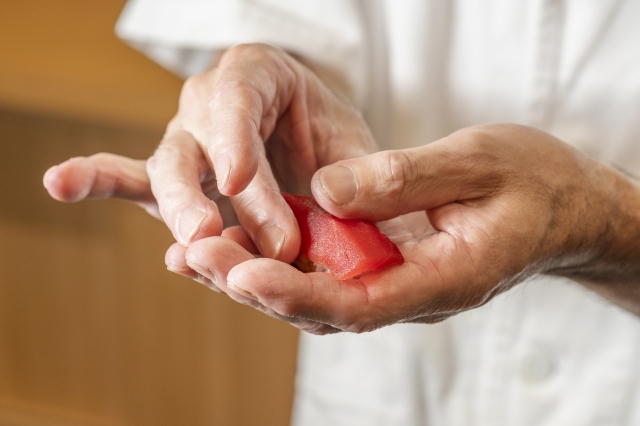
Onigiri is a Japanese food made by shaping cooked rice by hand into a triangle, cylinder, ball, or other form.
It may be made simply with salt. It may also contain fillings such as umeboshi pickled plum, salmon, kombu, tuna mayo, mentaiko, tarako, meat miso, or teriyaki chicken. Some onigiri are wrapped in nori seaweed, while others are left unwrapped or mixed with furikake, sesame, or other seasonings.
Outside Japan, some people confuse onigiri with sushi because both use rice and nori.
But onigiri and sushi are different foods.
Sushi is usually made with vinegared rice and is built around the combination of rice, seafood, and other toppings or fillings. Onigiri, by contrast, is made from lightly salted rice that is shaped for portability and easy hand-eating.
Sushi is often seen as a special meal or restaurant food. Onigiri is closer to everyday life, home cooking, bento, and snacks.
Understanding this difference makes it easier to see why onigiri is spreading overseas in a different way from sushi.
The roots of onigiri are old. It developed as a way to gather cooked rice by hand into a form that could be carried and eaten easily.
Rice was not only something to eat on the spot. It could also be taken elsewhere, eaten quickly, and shaped into a staple food that was filling and less likely to fall apart. This practical function lies at the starting point of onigiri.
When discussing the origin of onigiri, one often-mentioned example is the carbonized rice lump found at the Sugitani Chanobatake site in Nakanoto, Ishikawa Prefecture.
This is known as a trace of an old rice-based food and is sometimes introduced as an early form of onigiri. It was not the same as modern onigiri, which uses cooked white rice, fillings, and nori. Rather, it seems closer to a food made by gathering rice into a form that could be carried.
What matters is that the idea of shaping rice so it could be taken somewhere already existed in very early Japan.
The fillings and nori we know today were not yet in place. But the idea of shaping rice by hand into a portable form appears to have existed from an early stage.
Onigiri was not originally a glamorous dish.
It was a practical food born from daily necessity.
In simple terms, the origin of onigiri lies in the wisdom of making rice edible outside the home. Over time, salt, fillings, nori, and wrapping techniques were added, gradually bringing it closer to the onigiri we know today.
Texts from the Nara period (710-794) contain words related to nigiri-ii, meaning hand-shaped rice.
The old term nigiri-ii literally refers to rice that has been gripped or shaped by hand. It was not necessarily identical to modern onigiri, but it shows that the act of shaping rice by hand had already been recognized in language.
In the Heian period (794-1185), a rice food called tonjiki appeared at aristocratic banquets and other gatherings. It is said to have been made by shaping steamed rice into large portions and serving it to attendants or guests.
Onigiri at that time was not yet a small triangular snack like the modern version.
Still, the idea of forming rice, handing it to others, making it easier to eat outside a formal setting, and using it in gatherings all connects to later onigiri culture.
From the medieval period onward, onigiri was also used as portable food by warriors and travelers.
Wrapped in bamboo leaves or similar materials, it was easy to carry, easy to eat with one hand, and able to fill the stomach quickly. On battlefields and journeys, a meal that did not require bowls or utensils had great value.
At this stage, the basic value of onigiri was already clear.
It could be eaten by hand.
It could be eaten after cooling.
It was filling as a staple food.
It could be wrapped and carried.
This functionality is still connected to the modern popularity of onigiri.
During the Edo period (1603-1868), onigiri became even more familiar as part of bento, travel food, outdoor meals, and workday lunches.
Cherry blossom viewing, journeys, theater outings, farm work, breaks during labor: onigiri became a way to take rice from home into the outside world.
Fillings such as umeboshi, salmon, and kombu spread partly because of their saltiness and preservability. Onigiri was not merely a lump of rice. It was household wisdom designed to make rice easier to eat away from home.
For more on the role of portable rice foods in Japanese bento culture, see The Japanese Bento Culture | History, Meaning, and Timeless Tradition.
Modern onigiri cannot be discussed without convenience stores.
From the 1970s onward, as convenience stores spread across Japan, onigiri became not only something made at home, but also a snack anyone could buy at almost any time.
One especially important innovation was packaging that kept the nori from becoming soggy.
When the film is pulled away just before eating, the crisp nori wraps around the rice. This system is convenient even for Japanese people, and it can be very memorable for visitors from overseas.
Convenience-store onigiri changed onigiri from something made at home into a product through which people could experience Japanese everyday life.
One common overseas reaction to onigiri is surprise that it feels complete despite being so simple.
At a glance, the ingredients are rice, salt, nori, and filling. It looks very simple. But when eaten, the sweetness of the rice, the saltiness, the aroma of nori, the umami of the filling, and the handheld shape all come together.
For people overseas, onigiri is not as special or formal as sushi. That may be exactly why it is easy to accept as an everyday food.
When foreign visitors eat onigiri, some react by saying that it is the food they saw in anime.
Onigiri appears often in Japanese anime and manga: school lunches, field trips, club activities, food given by a friend, travel scenes, or bento made by family. In these scenes, onigiri is not a luxury dish. It is a food that represents Japanese daily life.
For that reason, when visitors find onigiri at a convenience store or specialist shop in Japan, it may not feel like a completely unfamiliar dish. It can feel like finally touching a Japanese food they had already seen on screen.
This is important when thinking about the popularity of onigiri.
Sushi and ramen are widely known as Japanese restaurant foods. Onigiri, however, may already live in people’s memories as a food from Japanese everyday life, thanks to anime and manga.
That is why the excitement of eating it is not only about flavor. It can also feel like experiencing a small piece of Japanese life.
When foreign visitors eat convenience-store onigiri in Japan, one of the first surprises is often the packaging.
By pulling the numbered film in order, the nori wraps around the rice without tearing. Even better, the nori stays crisp until the moment of eating.
For Japanese people, this may feel ordinary. For someone seeing it for the first time, it can feel like a small invention.
Convenience-store onigiri also offers remarkable variety.
Salmon, ume, kombu, tuna mayo, mentaiko, tarako, chicken gomoku, salmon roe, teriyaki-style fillings. The price is reasonable, the quality is stable, and it is an easy choice during travel.
Foreign visitors are moved by convenience-store onigiri not only because it tastes good. Price, quality, packaging, variety, cleanliness, and ease of purchase all combine into an experience of Japanese convenience.
For a broader look at this everyday infrastructure, see Japanese Convenience Stores: A Cultural Re-evaluation.
When discussing the overseas popularity of onigiri, convenience stores are not the whole story. Specialist onigiri shops also matter.
Long-established Tokyo shops such as Onigiri Bongo have been introduced in overseas media as symbols of Japanese onigiri culture. In that context, onigiri is not simply a cheap snack. The way the rice is cooked, the way it is shaped, the amount of filling, and the warmth of freshly made onigiri all become part of a craft.
This makes overseas interest in onigiri deeper.
Convenience-store onigiri brings surprise through ease and technology.
Specialist onigiri shops show the appeal of hand-shaping and fresh preparation.
Onigiri overseas can become a practical everyday lunch.
When these three layers overlap, onigiri is no longer just a rice ball. It becomes a way to see Japanese daily food culture.
Fillings that are easy to understand tend to be accepted overseas.
Tuna mayo is especially strong. Tuna and mayonnaise are familiar in many countries, and they go well with rice. For someone trying onigiri for the first time, tuna mayo feels safe and approachable.
Salmon is also popular. It has the umami of fish, but because it is cooked, it can be easier to accept for people who are hesitant about raw fish.
Teriyaki chicken, miso-based fillings, and soy sauce-based flavors are also easy to understand because their sweet-savory taste is familiar and clear.
For more on how tuna mayo became a Japanese onigiri staple, see The Origin and History of Tuna Mayo: From an American Flavor to a Japanese Onigiri Staple.
There is no single reason onigiri became popular overseas.
Sushi made the combination of rice and nori familiar. Visitors to Japan encountered convenience-store onigiri. Onigiri became known as a Japanese food that could be made at home. At the same time, more people began looking for light, portable, easy-to-prepare meals.
These elements overlapped and helped onigiri spread overseas.
The global spread of sushi helped create the foundation for onigiri’s acceptance overseas.
In the past, some people felt hesitant about black nori. But as sushi became familiar around the world, nori came to be seen more positively as a Japanese ingredient or a healthy sea vegetable.
Once people became familiar with rice and nori together, the psychological distance to onigiri became shorter.
For travelers to Japan, convenience stores often leave a strong impression.
They are clean, full of products, and reliable in food quality. Within that environment, onigiri is affordable, portable, and easy to choose for breakfast or while moving around.
Many people eat convenience-store onigiri several times during a trip to Japan. After returning home, some look for onigiri or try making it themselves.
Onigiri easily becomes a memory of Japanese everyday life experienced during travel.
After COVID, food habits changed in many parts of the world.
People ate out less and cooked more at home. In that environment, interest grew in meals that used fewer ingredients, were not too complicated, and could be carried easily.
Onigiri fits this shift well.
Cook rice, add a filling, shape it by hand. No special equipment is required. It can be lunch, a snack, a child’s meal, or food eaten during work.
What Japanese people had long taken for granted is being rediscovered overseas as a modern, light, practical meal.
Onigiri is known as a Japanese food culture.
However, the idea of gripping, wrapping, or shaping rice is not limited to Japan.
Korea has rice foods shaped by hand. Convenience stores in Taiwan and Hong Kong also sell triangular rice snacks similar to Japanese-style onigiri. In Southeast Asia, there are many cultures of wrapping rice or sticky rice for portability.
Around the world, people have found ways to make rice portable.
Even so, Japanese onigiri has its own distinctive form.
Lightly salted white rice.
Fillings placed inside.
Nori wrapped around the outside.
The feeling of shaping rice by hand.
Memories of home and bento.
Convenience-store packaging technology.
The value of freshly made onigiri at specialist shops.
All of these together form Japanese onigiri culture.
In other words, foods similar to onigiri exist around the world. But the way onigiri developed through home cooking, bento, convenience stores, specialist shops, and travel memories is distinctively Japanese.
Yaki onigiri, or grilled onigiri, is especially easy to accept overseas, particularly in Europe.
In Japan, yaki onigiri may bring to mind izakaya, frozen food, or a way to use leftover rice at home. It is not necessarily a dish every household makes every week.
In Europe, however, yaki onigiri can be seen as a Japanese food that is easy to prepare at home.
In many European households, cooking with an oven is familiar.
Bread, roast meat, grilled vegetables, baked sweets. Bringing out aroma through browning is part of everyday cooking.
Yaki onigiri fits this sensibility well.
The surface of the rice browns, and soy sauce or miso becomes fragrant as it toasts. The outside becomes slightly crisp while the inside stays soft. This naturally connects with the European idea that browning is a sign of flavor.
In Japan, yaki onigiri may require a pan or grill. In Europe, the idea of baking several at once in an oven can feel more natural, which helps make yaki onigiri approachable.
The flavor of yaki onigiri depends on the aroma of soy sauce or miso.
Europe has strong traditions of fermented foods such as cheese, bread, wine, ham, and cultured butter. The deep aroma of miso and soy sauce may therefore be easier to understand as fermented umami.
Plain white rice alone may feel too subtle to some people. But when it is brushed with soy sauce or miso and grilled, the aroma becomes stronger and the flavor becomes clearer.
For people overseas, yaki onigiri is not only a Japanese rice dish. It is also a dish of browning and fermented aroma.
Yaki onigiri is also approachable for people making Japanese food for the first time.
It does not require handling raw fish.
It can work without complex technique or even without a filling.
With soy sauce or miso, the flavor becomes easy to understand.
This simplicity helps yaki onigiri spread overseas.
It is easier to make at home than sushi and lighter to prepare than ramen. Yaki onigiri is a Japanese food that fits naturally into overseas kitchens.
In European cities, especially large urban areas, more shops are beginning to sell onigiri or specialize in it.
This is not only because Japanese food is popular.
Onigiri works well as lunch.
It is lighter than a bread sandwich, more filling than a salad, and easier to buy casually than sushi. It can be eaten with one hand, carried easily, and varied through different fillings.
These qualities suit urban life.
In cities such as Paris, interest in Japanese food expanded through sushi and ramen. After that, onigiri became easier to accept as a more everyday form of Japanese food.
Onigiri can be lunch during work or a snack while moving around, not only a special meal at a restaurant.
This is why onigiri has the potential to settle overseas. It is not only something people try once as a novelty. It can become a daily option.
Onigiri is accepted overseas not only because of taste and function.
Its shape, appearance, handheld nature, and Japanese simplicity also support its appeal.
Onigiri has a very simple appearance.
White rice.
Black nori.
A triangular shape.
This simplicity can look like Japanese minimalist design to people overseas.
It has no unnecessary decoration and fits in the palm of the hand. Even from its shape, it feels recognizably Japanese.
Onigiri is food, but it is also a small piece of design.
Rice dishes exist around the world, but staple foods made of rice that can be held and eaten directly are relatively limited.
Onigiri does not require a plate or chopsticks. Open the wrapper and eat.
This clarity is a major strength overseas.
Even without deep knowledge of Japanese food culture, a person can understand what to do: hold it and eat it.
Onigiri carries memories of home.
Onigiri made by someone for you.
Onigiri eaten on a school trip.
Onigiri packed in a lunch box.
For Japanese people, onigiri is connected not only to taste, but also to hands, people, and scenes from daily life.
As onigiri becomes something people overseas make at home, this feeling may gradually be shared. Onigiri is not only restaurant food. It is a Japanese food someone can make for another person.
In major cities, onigiri is increasingly seen in specialist shops, Japanese restaurants, convenience stores, and supermarkets.
It is not yet an everyday food in every country. Still, after sushi and ramen, it is becoming easier to notice as a lighter and more everyday Japanese food.
Easy-to-understand flavors tend to be popular.
Tuna mayo, salmon, teriyaki chicken, spicy tuna, and miso or soy sauce-based fillings are generally approachable for people overseas.
On the other hand, umeboshi and mentaiko have a stronger Japanese character and may divide preferences.
In the past, some people were hesitant about black nori.
However, the spread of sushi made nori familiar as a Japanese ingredient. Seaweed is also sometimes introduced as a healthy food, which has made nori easier to accept than before.
Yaki onigiri has an easy-to-understand appeal: browned rice, soy sauce, miso, and roasted aroma.
In Europe especially, oven and grill culture is familiar, and many people understand the value of flavor created through browning. That makes yaki onigiri a Japanese rice dish that connects naturally with local food culture.
Cultures of gripping, wrapping, or shaping rice exist in many parts of the world.
However, the combination of white rice, salt, fillings, nori, bento culture, convenience-store packaging, and specialist hand-shaped onigiri developed in a particularly Japanese way.
Onigiri is a Japanese food made by shaping cooked rice into an easy-to-eat form.
Its history is long. It has changed from portable food to bento, home cooking, convenience-store product, and specialist-shop craft, always staying close to Japanese daily life.
The overseas popularity of onigiri is not simply a Japanese food trend.
Sushi lowered resistance to rice and nori.
Convenience-store onigiri surprised visitors with its packaging and quality.
Specialist shops made onigiri visible as a hand-shaped food culture.
People began seeking lighter, easier meals.
Yaki onigiri connected with European roasting culture and fermented flavors.
These elements together have helped onigiri find a place overseas.
For Japanese people, onigiri may feel ordinary.
But inside that ordinary food are respect for rice, the gentleness of shaping by hand, the wisdom of portability, and the craft of making rice delicious even after it cools.
That may be why onigiri is spreading overseas not merely as a rice ball, but as a food that lets people feel Japanese everyday life.