Why Are Japan’s Vending Machines Disappearing? 2025 Data and the Real Reasons
CoCoRo編集部
CoCoRo

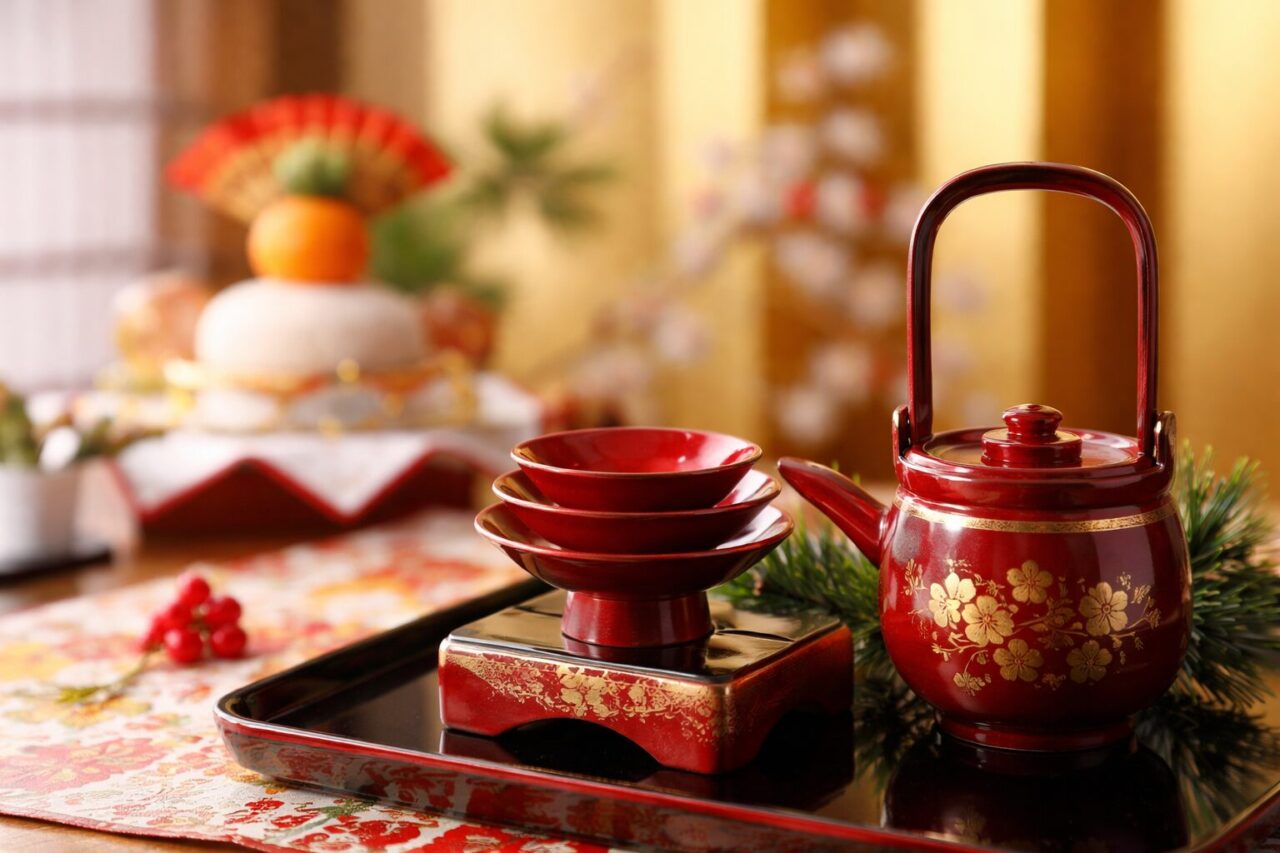
Otoso is a small New Year drink taken at the beginning of the year to help people feel ready to enter the year ahead.
In modern terms, it is a little like what some people do before a night out: eating something, drinking water, or taking a so-called hangover-prevention drink before alcohol. The point is not only whether it works medically. It is also the feeling of preparing yourself before entering a drinking occasion.
Otoso has a similar emotional structure.
But otoso is not preparing you for a party.
It is preparing you for the year ahead.
In older Japanese households, people would drink a small amount of sake or hon mirin infused with a blend of medicinal herbs called tososan. They did this at the beginning of the year while wishing for the health and longevity of the family.
It was not quite medicine.
It was not a formal religious ritual at a shrine.
And it was not just ordinary sake.
Otoso is best understood as a New Year drink for preparing the body and mind before stepping into a new year.
This article explains what otoso is, what tososan means, where the custom came from, how otoso is made, whether children can drink it, why it differs by region, and how it may look to people outside Japan.
Otoso is a Japanese New Year drink taken to wish for health, longevity, and protection from misfortune in the year ahead.
It is usually made by steeping tososan, a blend of medicinal herbs, in sake or hon mirin. Traditionally, family members drink a small amount on New Year’s morning or before the New Year meal.
Otoso is not simply alcohol.
For people in the past, the beginning of the year was not just a date on the calendar. It was a moment to reset the atmosphere of the home, prepare the family table, greet one another, and hope that the year would begin safely.
Otoso belonged to that flow.
Japanese New Year is made up of many small practices: food, decorations, visits to shrines or temples, greetings, and family meals. If you want to see otoso within the larger context of Japanese New Year, you may also want to read What Is Japanese New Year? Origins, Toshigami, and Hatsumode.
Otoso is not mainly about expecting a medical effect. It is about placing the wish, “May we stay healthy this year,” into a small drink shared at the start of the year.
In modern terms, otoso is a drink for preparing yourself before entering a special time.
In Japan, some people drink turmeric-based hangover-prevention drinks before going out for alcohol. In other places, people may eat something beforehand or “line the stomach” before drinking. The point is not always a strict medical calculation. It is also the feeling of getting ready.
Otoso is somewhat similar.
The difference is that otoso is not preparing you for a night of drinking. It is preparing you for a new year. By taking a small drink at the beginning of the year, people symbolically prepare their body, mind, and household for the year ahead.
This is why otoso has remained meaningful even when many people no longer drink it regularly.
Otoso can feel confusing because several meanings overlap inside one custom: medicine, alcohol, religion, and good-luck symbolism.
Today, we tend to separate these categories. Medicine is medicine. Alcohol is alcohol. Religion is religion. A good-luck custom is something else again.
But older New Year customs did not always separate them so clearly. Caring for the body, keeping misfortune away, wishing for family safety, and celebrating the beginning of the year could all exist in one small act.
Otoso is one of those acts.
The word toso has a slightly powerful sound.
It is often explained through the meanings of its two characters. The first, to, can be understood as driving away or cutting down evil influences. The second, so, is associated with revival or renewal.
From this interpretation, otoso has long been associated with wishes such as:
For people in the past, the turning of the year was not just a calendar change.
Passing through winter and entering a new year was a moment to reset both body and mind. That is why food and drink often carried meanings beyond nutrition.
Otoso was one of those foods and drinks.
It was not a large-scale ritual performed in a special place. It was a household practice for preparing to begin the year.
Tososan is the blend of herbs used to make otoso.
The exact ingredients vary depending on the product and period, but tososan may include aromatic or bitter herbs and spices such as Japanese pepper, balloon flower root, atractylodes, siler root, and cinnamon bark.
These are steeped in sake or hon mirin to create the distinctive aroma of otoso.
The important point is that tososan should not be treated as modern medicine simply because it sounds medicinal.
Historically, tososan was used as part of a New Year custom for preparing the body, driving away misfortune, and wishing for health. Today, it is safer and more accurate to understand it as a symbolic New Year ingredient rather than something with guaranteed medical effects.
Otoso is generally said to have roots in Chinese herbal wine customs.
One common explanation traces otoso to Hua Tuo, a legendary physician of ancient China. According to this story, he blended several medicinal herbs, steeped them in alcohol, and used the drink to help ward off illness and misfortune.
This should be understood as a traditional explanation rather than a single historical fact that can be proven in every detail. Still, it shows how otoso has long been connected with the idea of steeping herbs in alcohol at the beginning of the year to keep misfortune away.
The herbal blend used for otoso is sometimes formally called Toso Enmeisan.
Because the name includes enmei, meaning long life or life extension, it can sound as if the drink promises strong health benefits. That is not how it should be presented today. Toso Enmeisan is best understood within the New Year custom of wishing for long life, safety, and a good beginning to the year.
The idea of steeping herbs in alcohol at the beginning of the year was transmitted to Japan and became part of New Year practices at the imperial court. Over time, it spread beyond court culture and became part of household New Year customs.
It was not originally just a festive drink.
In earlier times, aromatic herbs and medicinal ingredients were believed to help prepare the body and keep harmful influences away. This was not medicine in the modern clinical sense, but it was part of everyday wisdom about health and seasonal transitions.
Eventually, otoso became connected with New Year greetings, family meals, and the atmosphere of the Japanese household at the beginning of the year.
Otoso is often said to have been adopted as an imperial court custom around the time of Emperor Saga in the early Heian period.
However, the otoso enjoyed in modern homes is not the imperial court ritual itself. It is a custom that gradually spread into ordinary households and became part of New Year life.
This way of treating special time differently from ordinary time is widely seen in Japanese culture. The idea that New Year is not merely a holiday, but a time to reset body and mind, is also related to the Japanese distinction between hare and ke.
Otoso can look religious at first.
It is done at New Year.
Family members drink it in order.
It is connected with words such as good fortune and driving away evil.
Seen from the outside, it may look like a Shinto or Buddhist ritual.
But otoso is not a formal ritual performed at a shrine. It is a household custom.
Of course, Japanese New Year itself is deeply connected with ideas such as welcoming Toshigami, the New Year deity. Many Japanese seasonal customs contain a mixture of faith, family life, and everyday practice. Otoso grew within that atmosphere.
Still, drinking otoso is not a required declaration of religious belief.
Not drinking it is not disrespectful. Drinking it does not turn the act into a formal religious ceremony.
In older Japanese life, prayer and everyday practice were closer together than they often are today. Otoso belongs in that in-between space.
In other words, otoso is not mainly about offering something to a deity. It is a household act for preparing to begin the year.
Otoso is a custom for wishing good health.
But if we think of it as something that makes people healthy in a modern medical sense, we misunderstand it.
Tososan contains herbs, but otoso is usually taken in a small amount at New Year. It should not be presented as if it works like a medicine. It is better understood as a drink into which people placed their wish for health and longevity.
This distinction makes otoso much easier to understand.
Otoso does not guarantee health.
It expresses the wish for health while helping people feel ready to begin the year.
That difference matters.
At the beginning of a new year, people naturally wish for the safety of themselves and their family. May we avoid illness. May no major misfortune come. May we live peacefully.
Otoso gave that feeling a small, physical form.
That is why asking only whether otoso “works” can miss the point. It makes more sense to see it as a way of preparing for the year ahead.
The way otoso is made varies by household and region.
In general, tososan is steeped for several hours in sake or hon mirin. Some households prepare it on New Year’s Eve and drink it on the morning of New Year’s Day.
Using hon mirin gives the drink more sweetness. Using more sake makes it cleaner and sharper. Some households use only hon mirin.
Hon mirin is a type of alcoholic mirin, not a non-alcoholic mirin-style seasoning. Because otoso is traditionally made with alcohol, hon mirin is the appropriate ingredient when mirin is used.
In some homes and regions, people drink plain sake as “otoso” without using tososan.
Strictly speaking, traditional otoso is made by steeping tososan in alcohol. But in modern households, the custom is sometimes simplified and kept as a New Year toast.
Rather than saying that plain sake is simply wrong, it is better to distinguish between the traditional form using tososan and a simplified modern form that keeps the feeling of the custom.
Otoso is often drunk on the morning of New Year’s Day or before the New Year meal.
After the year has changed, family members gather and wish for health and longevity. Because of this timing, otoso has a different meaning from ordinary drinking.
The important thing is not to follow a recipe perfectly. It is to create a moment at the beginning of the year for wishing good health and shifting the mind into a new year.
In some traditions, otoso is drunk from the youngest person to the oldest.
This order is often explained through the idea that the vitality of the young is shared with the older members of the family.
In other homes and regions, however, the oldest person may drink first. The custom has never been completely uniform across Japan.
This variety shows that otoso was not a single national rule, but a flexible household and regional custom.
What matters most is not the exact order. It is the act of gathering at the beginning of the year.
Family members and close relatives face one another and quietly feel, “Let us begin this year together.” Otoso helped create that moment.
Otoso is sometimes associated with a formal set of three stacked cups, with the drink taken little by little.
This style gives the New Year moment a sense of care and ceremony. Today, many households simplify the practice, and there is no need to insist that everyone must use three cups.
Again, the main point is not perfect form. It is the feeling of entering the new year slowly and carefully.
Otoso contains alcohol when it is made with sake or hon mirin.
For that reason, children and minors do not need to actually drink otoso. In some families, children may only touch the cup to their lips or simply participate in the greeting without drinking.
Today, it is more natural not to make children drink it.
The same applies to pregnant people, people who plan to drive, and anyone who avoids alcohol. A New Year custom is not a reason to force alcohol on anyone.
The essence of otoso is not alcohol consumption. It is the shared moment of marking the New Year, wishing for health, and gathering with others.
These alternatives can still carry the meaning:
Respecting tradition and respecting modern safety are not opposites.
In fact, customs often survive better when their form can adapt.
If otoso is made with sake or hon mirin, it contains alcohol even if the amount is small.
Anyone who plans to drive should avoid drinking it. It should not be treated lightly just because it is a New Year custom or “only one sip.”
Otoso itself is not an illegal custom.
However, underage drinking and drinking before driving are separate issues. The tradition of otoso should be understood separately from modern legal and safety responsibilities.
Otoso can be difficult to explain to people outside Japan.
It is alcohol infused with herbs.
It is drunk at New Year.
It is connected with health, but it is not medicine.
It can look religious, but it is a household custom.
From the outside, otoso may look like a mixture of food, herbal wine, good-luck ritual, and family tradition.
In English, otoso may be described as medicinal sake or spiced sake.
But that is not quite enough. Otoso is not only sake with herbs. It is a small New Year drink taken while wishing for the health of the family and preparing to enter the year ahead.
A clearer explanation might be:
“Otoso is a small herbal New Year sake drunk in Japan to wish for health and longevity as the year begins.”
The taste of otoso depends on the sake, hon mirin, and tososan used.
Hon mirin makes it sweeter. More sake gives it a clearer alcoholic aroma. Because tososan may contain aromatic herbs and spices such as Japanese pepper or cinnamon bark, some people notice a herbal scent, a spiced quality, or a slight bitterness.
Some people from outside Japan may find that herbal quality interesting or pleasantly spiced. Others may find it unusual or a little difficult.
What may surprise overseas readers is not only the herb blend. It is the idea of placing a family’s wish for health and safety into a small drink.
In Japan, many foods and drinks carry seasonal wishes. Osechi dishes, ozoni, New Year soba, and seven-herb rice porridge are not only eaten for flavor. They also help people feel the change of season and the beginning of a new stage.
Otoso belongs to that same world.
So when explaining otoso to people outside Japan, it is better not to present it only as a strange New Year alcohol. It is more meaningful to explain how Japanese people have used small foods and drinks to mark the beginning of the year.
Some people wonder whether otoso is only a Kyushu custom.
Otoso is not limited to Kyushu. It has been known as a New Year custom across Japan.
However, whether it is still practiced at home differs by region and household.
In some places, it remains a familiar New Year practice. In others, people know the name but no longer drink it. In some families, grandparents may have practiced it, while younger generations no longer do.
This is because otoso is not a mandatory ritual. It is a custom that survived through family life.
Just as ozoni varies greatly from region to region, otoso has also remained in different ways depending on place and household. For more on regional differences in Japanese New Year food, see Japan Winter Food Guide.
Otoso and amazake are both drinks people may encounter around New Year in Japan.
Their roles are different.
Amazake is often enjoyed as a warming winter drink. It is associated with shrine visits, winter stalls, and cold weather.
Otoso, on the other hand, is a New Year drink taken to wish for health and longevity at the beginning of the year. It is not an everyday drink. Its meaning comes from appearing at the turning point of the year.
In short, amazake is more strongly associated with warming the body in winter. Otoso is more strongly associated with becoming aware that a new year has begun.
Neither is more correct than the other.
But otoso feels especially New Year-like because it is set apart from ordinary daily drinking.
Otoso reveals something important about Japanese New Year culture.
Japanese New Year is not built only from large celebrations. It is made from small acts.
Cleaning the home.
Preparing decorations.
Greeting one another.
Sharing a festive meal.
Eating foods with lucky meanings.
Wishing for the health of the family.
None of these acts has to be dramatic.
But each one carries the feeling of wanting to begin the year well.
Otoso is one of those acts.
It is not a drink for proving whether something works medically. It is a drink for setting the atmosphere of New Year. It is not a strict religious ceremony, but it expresses something close to prayer within everyday life.
This feeling also connects with the words Japanese people say before and after meals. For more on gratitude at the table, see Itadakimasu & Gochisousama: Meaning and History of Japan’s Mealtime Gratitude.
Otoso quietly expresses both a wish for health and gratitude for sharing the New Year table.
If you want to bring otoso into modern life, you do not need to recreate every old rule perfectly.
What matters is finding a form that makes sense for you and your household.
You might steep tososan in sake or hon mirin.
If you avoid alcohol, you might simply enjoy the scent or use a non-alcoholic alternative.
If there are children, you might explain the custom briefly and let them join with another drink.
If you live alone, you might take a quiet moment on New Year’s morning to think about how you want to enter the year.
Even that can come close to the meaning otoso once carried.
Traditions do not survive only by preserving their exact form.
They become personal when we understand why the form existed and receive it again in a way that fits our own lives.
Otoso is a Japanese New Year drink taken to wish for health, longevity, and a safe beginning to the year.
In modern terms, it is like a New Year version of preparing yourself before entering an important time.
It is made by steeping tososan, a blend of herbs, in sake or hon mirin. Because of that, it has been connected with health. But it should not be described as medicine with guaranteed effects. It is better understood as a cultural expression of wishing for health.
It is also not a formal shrine ritual. It is a household custom passed down through Japanese New Year life.
Otoso has not remained because everyone believes it has a clear medical effect. It has remained because many people have felt, at least quietly, that the beginning of the year deserves a small act of preparation.
If we judge otoso only by whether we drink it or not, it can feel confusing.
But behind it is a simple human wish: to begin the year well.