What Is Marine Day in Japan? Why Japan Has a National Holiday for the Sea
CoCoRo編集部
CoCoRo

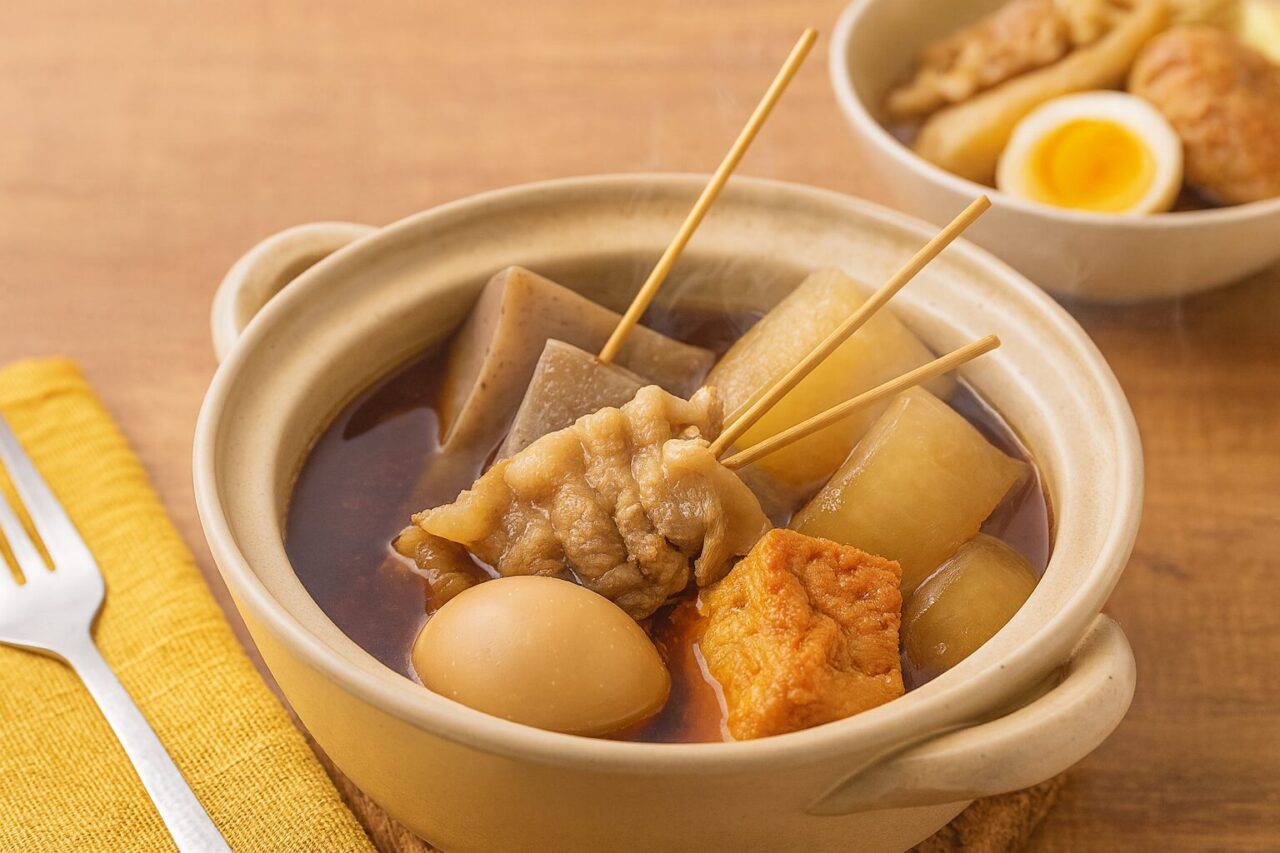
Oden is one of those Japanese foods whose appeal is difficult to understand from appearance alone.
At first glance, it may look simple: daikon radish, eggs, konjac, fish cakes, beef tendon, and other ingredients quietly simmering in a light brown broth. It does not have the visual drama of sushi, the crispness of tempura, or the powerful aroma of ramen.
Yet many foreign visitors who try oden in Japan are surprised by it.
They notice how soft the daikon becomes, how deeply the dashi broth soaks into each ingredient, how comforting the warmth feels in winter, and how a dish that looks modest can taste unexpectedly rich.
Oden is not impressive because it is flashy. It is impressive because of quiet completeness.
This article explains what oden is, whether it is Japanese food, where oden comes from, why foreign visitors react strongly to it, why daikon radish is especially memorable, how dashi and fish cakes support the flavor, and why oden is difficult to recreate overseas.
Oden is a Japanese simmered dish made with ingredients such as daikon radish, boiled eggs, konjac, fish cakes, beef tendon, and kelp, cooked slowly in a dashi-based broth.
It is eaten at home, at specialty restaurants, in izakaya, and sometimes from convenience stores during the colder months.
The defining feature of oden is not heavy seasoning. It is the way dashi broth enters the ingredients. Oden does not coat food with a thick sauce. It lets flavor move quietly into each piece.
That is why oden can feel gentle and deep at the same time.
Yes. Oden is Japanese food.
It developed in Japan as a dish built around dashi, seasonal ingredients, regional fish cakes, and winter comfort.
At the same time, oden is not exactly the same everywhere in Japan. Kanto-style oden, Kansai-style oden, Shizuoka oden, Nagoya-style variations, and regional versions using local fish cakes can differ in broth color, flavor, ingredients, and toppings.
So, if you describe oden simply, it is a Japanese dashi-based simmered dish. But in practice, it is also a dish that reflects local food culture.
In English, oden is sometimes described as a Japanese winter stew or a Japanese hot pot.
Those phrases can help people understand the basic idea, but they are not perfect.
A Western stew often uses meat, fat, flour, butter, wine, or strong seasonings to create richness. Oden is usually lighter. Its depth comes from dashi, soy sauce, mirin, and the flavors released by the ingredients.
Hot pot is closer in some ways, because oden is served warm and includes many ingredients in one pot. However, oden is usually simmered in advance so the ingredients absorb the broth.
The best short explanation may be: oden is a Japanese winter simmered dish made with dashi broth.
Oden is not as globally famous as sushi or ramen.
However, more people are discovering it through travel in Japan, izakaya meals, convenience store food culture, videos, and social media.
The reason it leaves a strong impression is the gap between appearance and taste.
For someone seeing oden for the first time, it may look plain. But after tasting it, the softness of daikon, the umami of dashi, the savory fish cakes, and the warmth of the broth create a different impression.
That “I did not expect this to be so good” reaction is one of oden’s greatest strengths.
The roots of oden are often connected to dengaku.
Dengaku is a dish in which ingredients such as tofu or konjac are skewered, grilled, and served with miso. Over time, this older style of eating changed, and oden moved closer to the simmered dish people know today.
In other words, oden did not begin in its modern form.
It changed from a miso-flavored grilled food into a dashi-based simmered dish. That change tells us a great deal about Japanese food culture.
The ingredients most often associated with oden’s roots are tofu and konjac.
These were used in dengaku, which is commonly discussed as one of the historical sources of oden.
However, dengaku and modern oden are not the same dish. Dengaku is usually grilled or skewered and served with miso. Modern oden is simmered in broth.
Still, both are built around simple ingredients that were familiar in everyday Japanese food.
Oden moved closer to its modern form as dashi and soy sauce became more important in Japanese cooking.
Instead of putting miso on the outside of each ingredient, people began warming ingredients in broth and allowing the flavor to enter them.
This shift made oden more flexible.
Daikon, eggs, konjac, fish cakes, beef tendon, kelp, and many other ingredients can all belong in one pot because dashi connects them.
Without dashi, oden would feel like a random collection of ingredients. With dashi, it becomes one dish.
For more on how dashi creates umami in Japanese cooking, see what dashi is and how it defines umami.
In the Edo period, oden became popular as a warm, quick food for townspeople.
People could stop by a stall, choose a piece, eat something hot, and continue with their day. In that sense, oden had something close to the role of fast food.
It was not necessarily a luxurious meal. It was warm, accessible, and practical.
That daily quality remains important today. Modern convenience store oden has a similar structure: people can choose one or two warm pieces without going to a formal restaurant.
Oden has long been a food of everyday warmth.
Oden differs greatly by region.
Kanto-style oden often has a slightly darker soy-sauce-based broth. Kansai-style oden may be lighter and more focused on kombu dashi. Shizuoka oden is known for dark broth, kuro hanpen, and toppings such as aonori and dashi powder.
Even under the same name, oden changes from place to place.
For foreign visitors, this regional variety can be fascinating. The oden they eat in Tokyo, Shizuoka, or Kansai may not taste the same.
That difference reveals the depth of Japan’s local food culture.
Foreign reactions to oden often center on a few clear points.
It looks plain but tastes deeper than expected. The daikon radish is surprisingly soft. The broth feels gentle. The ingredients are easy to choose. And during travel, oden can feel soothing rather than heavy.
Oden is not a food whose charm is obvious from a photo.
That is exactly why the first bite can be memorable.
One reason foreign visitors are surprised by oden is the contrast between appearance and flavor.
Daikon, eggs, konjac, and fish cakes may not look especially exciting at first. They may simply appear to be pieces of food sitting in a brownish broth.
But when eaten, each ingredient has absorbed dashi in a different way.
The result is a dish that feels much deeper than it looks.
This “plain but delicious” gap is one of the reasons oden stays in people’s memory.
Daikon radish is one of the ingredients that most often surprises foreign visitors.
In many countries, radishes are small, crisp, peppery, and often eaten raw. Even when people know daikon, they may not expect a thick white root vegetable to become soft, juicy, and full of broth.
In oden, daikon can become so tender that it cuts easily with chopsticks.
When someone bites into it, the dashi spreads through the mouth. That texture and flavor can be unexpected for people who have never experienced simmered Japanese daikon.
Eggs are easy for many visitors to try because eggs are familiar in many countries.
But an oden egg is not just a boiled egg. The white absorbs the broth, and the yolk becomes warm and comforting.
Fish cakes are more unfamiliar for some visitors. They have a springy texture and release savory flavor when chewed.
Beef tendon can also be surprising. In some countries, tendon may be associated with toughness. In oden, it is simmered until tender, creating a texture that is very different from what some visitors expect.
Oden works well because it offers both familiar and unfamiliar ingredients in the same pot.
Travel can be tiring.
After eating ramen, fried foods, meat dishes, sweets, and street snacks, many people want something warm and light. Oden fits that moment well.
It is warm, low in oil, and easy to order one piece at a time. It includes familiar ingredients such as eggs and daikon, while still offering something distinctly Japanese.
This sense of safe, warm comfort is one reason Japanese food is sometimes described as comfort food. For more on that broader idea, see why Japanese food is called comfort food.
Among all oden ingredients, daikon radish often makes the strongest impression.
The reason is easy to understand.
A thick piece of white vegetable becomes soft enough to cut with chopsticks, holds its shape, and releases dashi when eaten. The transformation is simple, visible, and surprising.
Oden daikon is cooked until tender, but it should not fall apart.
It keeps its shape while becoming soft all the way through. This balance is not automatic. It depends on preparation, simmering time, temperature control, and letting the broth enter the vegetable.
For many foreign visitors, the surprise is not only that daikon tastes good.
It is that a vegetable they expected to be plain becomes one of the main stars of the dish.
In many countries, the word radish suggests a small, crunchy, sharp-tasting vegetable.
Japanese daikon is different. It is larger, has a high water content, and is often used in simmered dishes, grated condiments, pickles, soups, and stews.
Of course, daikon varies by season and variety, but the daikon used for oden is well suited to slow cooking.
That is why the texture foreign visitors imagine when they hear “radish” may be very different from the texture they experience in oden.
For more on Japanese daikon and how it differs from many overseas radishes, see Japanese white radish culture.
Oden daikon is not delicious simply because broth touches the outside.
It becomes delicious because the broth enters the inside.
Daikon contains a lot of water. When it is cooked slowly, its texture softens and it can hold dashi. When eaten, the flavor spreads from within.
This is why some visitors describe oden daikon as juicy.
It is not juicy in the same way as fruit or meat. It is juicy because the dashi has become part of the vegetable.
Oden is not a dish that becomes better simply by boiling hard.
To make daikon tender and flavorful, it needs time, gentle heat, and careful control. If the heat is too strong, the broth may become cloudy or the ingredients may break down.
Good oden often depends on patient simmering and allowing ingredients to absorb flavor gradually.
That is why oden daikon tastes different from a vegetable that has merely been boiled.
It is not just cooked. It is given time to receive flavor.
Daikon often receives the most attention, but fish cakes and dashi support the flavor of the entire pot.
Fish cakes absorb broth, but they also release umami into the broth. Dashi enters the fish cakes, and the fish cakes deepen the dashi.
That interaction is one of the reasons oden tastes richer than it looks.
Oden often includes fish cakes such as chikuwa, satsuma-age, hanpen, tsumire, and other forms of nerimono.
These are not only extra ingredients.
They help build the flavor of the pot. Their fish-based umami and, in some cases, fried aroma add depth to the broth.
That is why oden without fish cakes can feel less complete.
Fish cakes are both ingredients and flavor builders.
For some foreign visitors, the texture of Japanese fish cakes can feel unfamiliar.
They are not like meat, not exactly like fish fillets, and not the same as many Western processed foods. They can be springy, soft, airy, or chewy depending on the type.
Quality and freshness matter greatly.
Even if oden is made overseas, it may not feel the same if the fish cakes lack the texture and umami found in Japan.
Oden is not rich because it is oily.
Its satisfaction comes from dashi, soy sauce, mirin, kelp, fish cakes, and the ingredients themselves.
Many stews around the world create richness through meat fat, butter, oil, wine, flour, spices, or long reduction. Oden is different. It remains relatively light while still feeling complete.
That is why oden can be comforting at night or during travel without feeling too heavy.
One appeal of oden is that people can choose ingredients one by one.
For foreign visitors, popular ingredients often fall into three groups: easy-to-understand ingredients, surprisingly soft ingredients, and ingredients with unfamiliar but memorable textures.
Daikon is often the most memorable oden ingredient.
It looks simple, but it becomes tender and full of dashi. For many visitors, the surprise is that a vegetable can feel like the main attraction.
If you want to explain the appeal of oden through one ingredient, daikon is probably the strongest choice.
Eggs are one of the easiest oden ingredients for first-time visitors to try.
Almost every food culture has egg dishes, so the ingredient feels familiar and safe.
But an oden egg is more than a boiled egg. The white absorbs the broth, and the yolk becomes warm and gentle.
It is simple, but deeply satisfying.
Beef tendon can be more challenging for some visitors.
In some countries, tendon is associated with toughness or low-value cuts.
In oden, however, beef tendon is simmered until tender. The texture can be soft enough to separate with chopsticks, and the flavor of beef and dashi comes together.
That difference can create a strong surprise.
Fish cakes can be difficult to explain before eating.
But once people try them, they often notice the springy texture and savory flavor.
The reaction may be something like: “I do not know exactly what this is, but it tastes good.”
Oden is good at offering familiar and unfamiliar foods in the same gentle setting.
Oden is appreciated by many visitors, but it has not spread overseas as widely as sushi or ramen.
The reason is not that oden lacks appeal.
Rather, oden depends on several conditions working together: ingredients, dashi, temperature, and the place where it is eaten.
Two of oden’s most important elements, daikon and fish cakes, can be difficult to reproduce overseas.
The right kind of daikon may not be easy to find. Fish cakes also vary greatly in texture, freshness, and quality.
Even if an overseas version looks similar, the tenderness, juiciness, and umami may not match what people experience in Japan.
This is one of the biggest reasons oden is difficult to recreate.
Oden assumes dashi.
It relies on the flavor of kombu, bonito flakes, soy sauce, mirin, and the umami released from ingredients.
If that background is missing, oden may be misunderstood as a thin soup with miscellaneous ingredients.
In places where people do not commonly make dashi at home, the center of oden’s flavor can be hard to reproduce.
Oden is not simply a dish that should be boiled for as long as possible.
Different ingredients need different treatment. Daikon benefits from time and gentle heat. Fish cakes can lose texture or flavor if overcooked. Eggs, konjac, and beef tendon also respond differently to heat.
Good oden is made by quiet control.
That subtle control is another reason it is not easy to reproduce overseas.
In Japan, convenience store oden has become part of the winter food landscape.
People can choose warm ingredients one by one and take them home. For foreign visitors, this can feel like a very Japanese everyday experience.
But convenience store oden is not just a pot sitting at the counter.
It depends on temperature control, hygiene management, ingredient rotation, and careful timing. Behind the convenience, there is a detailed system.
This combination of everyday access and quiet management is part of what makes oden culture distinctive.
Oden is not a flashy dish.
That is exactly why it can surprise people.
Daikon becomes soft enough to cut with chopsticks. Eggs feel familiar but more comforting than expected. Fish cakes support the flavor of the pot. Beef tendon creates a texture gap. Dashi ties everything together.
Oden does not overwhelm ingredients with strong seasoning.
It draws out their flavor through broth, time, and warmth.
Foreign visitors are moved by oden not simply because it is unusual Japanese food. They are moved because a dish that looks plain can deliver softness, depth, warmth, and calm satisfaction.
Oden is also a food that reflects gratitude toward ingredients, time, and the people who prepare meals. That feeling connects with the Japanese words said before and after eating. For more on that food culture, see Itadakimasu and Gochisousama.
Oden is a highly complete simmered dish, but it is also something more ordinary and more intimate.
It is a bowl of Japanese winter warmth.
Oden is a Japanese simmered dish made with ingredients such as daikon radish, eggs, konjac, fish cakes, beef tendon, and kelp, cooked slowly in a dashi-based broth. It is especially popular in winter.
Yes. Oden is Japanese food. It developed in Japan through dashi culture, regional ingredients, fish cakes, and winter eating habits.
Oden is often linked to dengaku, a dish made with ingredients such as tofu or konjac served with miso. Over time, it changed from a miso-based grilled or skewered dish into a dashi-based simmered dish.
Oden can be explained as a Japanese winter simmered dish made with dashi broth. It is sometimes called Japanese winter stew, but it is usually lighter and less oily than many Western stews.
Daikon radish, eggs, beef tendon, and fish cakes are often memorable for foreign visitors. Daikon is especially surprising because it becomes soft, juicy, and full of dashi.
Oden daikon becomes soft because it is prepared and simmered slowly so the broth can enter the vegetable. Gentle heat, time, and careful control help it become tender without falling apart.
Oden is difficult to recreate overseas because the right daikon, fish cakes, dashi ingredients, and simmering technique may be hard to match. The dish depends on both ingredients and quiet temperature control.