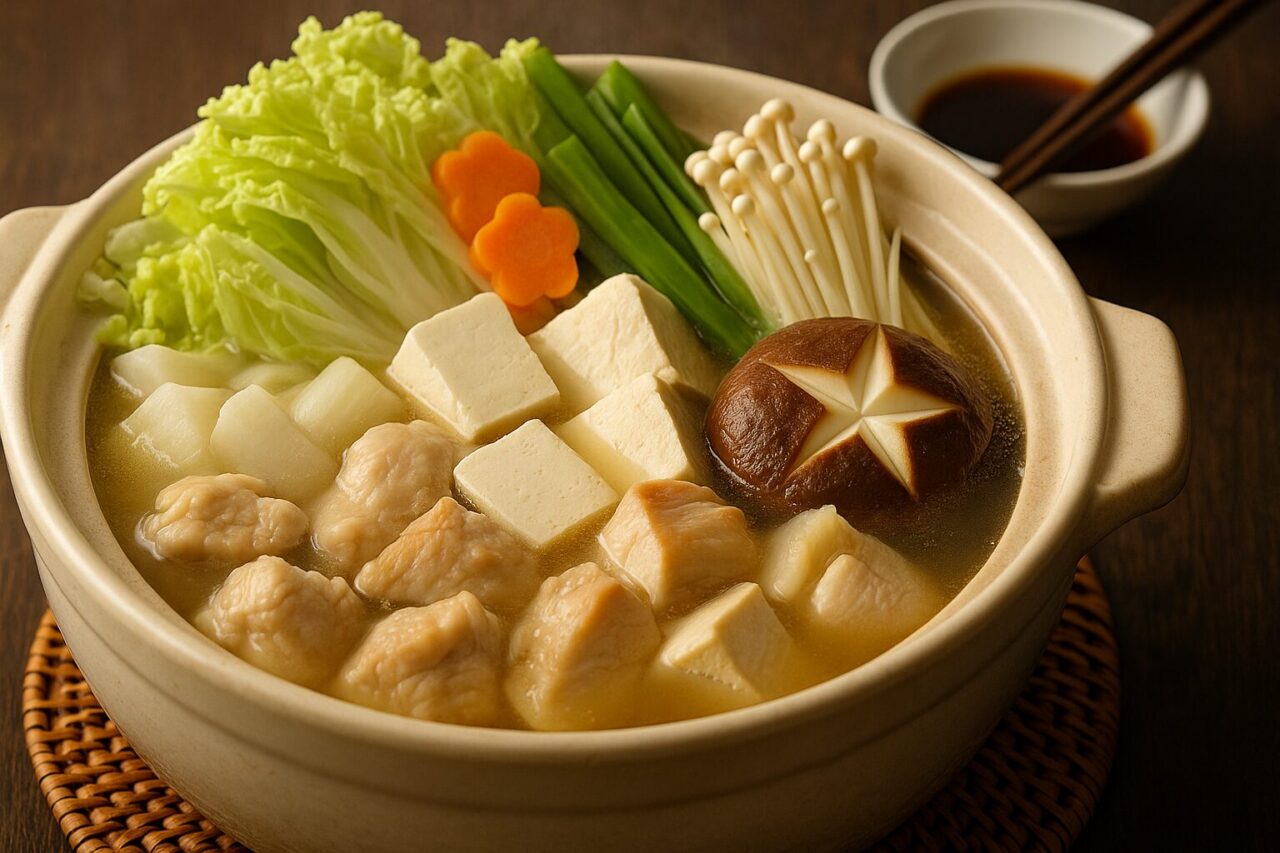
What Is Nabe? Japanese Hot Pot Culture, Types, History, and Foreign Reactions
CoCoRo編集部
CoCoRo


Udon is a Japanese noodle dish made from wheat flour, water, and salt.
The ingredients are simple, but udon became much more than a plain wheat noodle in Japan. Across the country, different regions developed their own noodle thickness, texture, broth, toppings, and ways of eating. That is why udon is best understood not only as a food, but as part of Japanese everyday culture.
So where is udon from?
Modern udon is a Japanese dish. However, its distant roots are often linked to wheat-based foods that came from China. The important point is that those early forms were not the same as the udon people eat today. Udon became udon through a long process in Japan: wheat foods were adapted, noodle-making changed, dashi broth developed, and regional food cultures gave the dish many local forms.
In short, udon has foreign-influenced roots, but the culture of udon was shaped in Japan.
Udon is a thick Japanese noodle made by kneading wheat flour with water and salt, then cutting and boiling the dough.
It can be served in a hot broth, chilled with dipping sauce, mixed with egg and soy sauce, topped with curry, or eaten with tempura, meat, fried tofu, or vegetables.
Although udon is made from wheat, it is not the same as pasta, ramen, or Chinese noodles.
Udon is valued for its texture, thickness, chewiness, and the way it works with dashi broth. Rather than being covered in a heavy sauce, udon often depends on balance: noodle, broth, seasoning, toppings, and temperature.
Yes. Udon is Japanese food.
The reason is not that wheat itself is uniquely Japanese. It is that udon developed inside Japanese eating habits.
Dashi made from kombu, bonito flakes, dried sardines, or shiitake mushrooms; soy sauce or miso-based seasoning; seasonal toppings; regional noodle styles; and everyday ways of eating all shaped udon into a Japanese dish.
Japanese cuisine is not defined only by rice. It is also about how ingredients are handled, how flavors are drawn out, and how food becomes part of daily life. In that sense, udon is a wheat dish that Japan absorbed into its own food culture.
For a broader view of Japanese cuisine and how it gives meaning to ingredients, see kaiseki and the origin of Japanese cuisine.
The origin of udon is not explained by one simple story.
One common view is that udon is related to wheat-based foods brought from China. Around the Nara period, foods made from wheat flour entered Japan through cultural exchange with the continent.
One of the terms often mentioned is konton, also written as wonton-like characters in some historical discussions. This was not a long noodle like modern udon. It was closer to a dumpling or filled wheat-based food.
Some explanations suggest that the word and food form changed over time and eventually became connected with the characters used for udon.
But this does not mean that modern udon already existed in the Nara period.
It is better to separate three things:
the origin of wheat-based foods,
the development of cut or stretched noodles,
and the formation of udon as a Japanese dish served with broth.
The history of udon becomes easier to understand if we separate several stages.
Konton can be seen as a distant root of wheat-based food. It shows that flour-based foods from the continent influenced Japanese food culture.
Kirimugi refers to wheat dough that was cut into strips. This is closer to the direction of noodles and is often discussed in relation to later noodle dishes.
Ondon refers to a warm noodle dish. This is much closer to the image of udon as people understand it today: wheat noodles served in a warm broth.
So if we summarize udon’s origin in one sentence:
Wheat-based foods came from the continent, changed into cut and warm noodle dishes in Japan, and eventually became udon through Japanese broth, regional food habits, and everyday cooking.
That is the clearest way to understand the origin of udon without oversimplifying it.
Another important story connects udon with the Buddhist monk Shoichi Kokushi, also known as Enni.
According to this tradition, Shoichi Kokushi returned from Song China during the Kamakura period and brought back milling technology. Better milling made wheat flour easier to produce and helped noodle culture develop.
Because of this story, Hakata in Fukuoka is sometimes described as one of the birthplaces of udon in Japan.
This does not mean we should say, with absolute certainty, that udon was invented by one person in one place. Food history is rarely that simple.
It is more accurate to see the Shoichi Kokushi story as one important tradition about how milling technology, temple culture, and noodle-making spread in Japan.
Udon was not born in a single moment. It was shaped by many overlapping factors:
wheat-based foods from the continent,
milling technology,
temple and regional food culture,
local wheat farming,
dashi broth,
and everyday meals.
Today, udon means thick Japanese wheat noodles.
The word is written in Japanese as うどん, and sometimes with the characters 饂飩. The origin of the word is not completely settled, and several explanations exist.
Some theories connect the word to older wheat-based foods such as konton or ondon. Others focus on how pronunciation and written characters changed over time.
For modern readers, the most practical meaning is simple: udon refers to thick wheat noodles that became part of Japanese food culture.
In Japan, udon is not only a shape of noodle.
It also carries expectations:
a warm bowl of broth,
a quick lunch,
a regional specialty,
a comforting meal,
a food that children and older people can eat easily,
a dish that can be simple or deeply local.
That is why the meaning of udon is cultural as well as culinary.
Early wheat-based foods were not everyday meals for most people.
In ancient and medieval Japan, wheat flour was not always easy for ordinary people to obtain. Wheat-based dishes were connected with temples, elite food culture, and the spread of milling techniques.
Over time, however, wheat foods moved closer to ordinary life.
As milling improved and local agriculture changed, wheat could be turned into noodles more regularly. Udon gradually became less of a special food and more of a practical meal.
Udon became more deeply rooted in local food culture during the Edo period.
In some regions, rice was difficult to grow in large quantities, or rice had a special economic role. Wheat became an important food crop in such areas.
People ground wheat into flour, kneaded it with water and salt, boiled it, and paired it with local broths and toppings.
This was not a dish invented from theory. It remained because it fit daily life.
Udon spread further after World War II as Japan’s food system changed.
Wheat-based foods became more common, and advances in milling, drying, refrigeration, and freezing made udon easier to produce and distribute.
Dried udon, frozen udon, station udon shops, school meals, workplace cafeterias, and home cooking all helped udon become a national everyday food.
Today, udon is both regional and universal in Japan: it belongs to local traditions, but it is also available almost everywhere.
One reason udon culture grew in Japan is that udon is highly adaptable.
The basic ingredients are simple: wheat flour, water, and salt. Because of that simplicity, local water, climate, broth, soy sauce, miso, toppings, and eating habits can change the result dramatically.
Sanuki udon emphasizes firmness and chew. Ise udon is soft and thick. Inaniwa udon is thin and smooth.
Udon did not require one fixed answer. It could change according to local conditions, which allowed many regional udon cultures to grow.
Water is one reason Japanese udon has a distinctive texture.
Many parts of Japan have relatively soft water, which works well with wheat flour and helps create smooth, supple noodles. In areas with hard water, dough can behave differently and produce a firmer, more pasta-like texture.
Japan’s humidity also matters.
Because dough does not dry too quickly, it can rest and mature. Udon makers adjust water, salt, and resting time depending on the weather and humidity.
This is not only a recipe. It is a kind of sensory skill.
The craft behind simple foods connects with the broader Japanese idea of shokunin temperament, discussed in Japanese shokunin spirit.
Udon is not defined only by the noodle.
Dashi is essential.
By drawing umami from kombu, bonito flakes, dried sardines, or shiitake mushrooms, Japanese cooks created broths that made wheat noodles feel distinctly Japanese.
Kansai-style udon broth tends to be lighter and clearer, often highlighting kombu. Kanto-style broth is often darker, with stronger soy sauce and bonito flavors.
These differences are not random. They reflect regional water, seasoning, trade, and taste.
Dashi is not about adding heavy flavor. It is about drawing out flavor. That is one reason udon can feel gentle but still deeply satisfying. For more detail, see what dashi is and how it defines umami.
Sanuki udon from Kagawa Prefecture is famous for its firm chew and smooth texture.
The region had conditions that supported wheat cultivation and salt production, and the result was a noodle culture centered on strength, simplicity, and texture.
Sanuki udon is often served as kake udon, bukkake udon, kamaage udon, or kamatama udon.
Inaniwa udon from Akita Prefecture is thin, smooth, and elegant.
It is a hand-stretched dried udon that uses the cold climate and drying process to create a refined texture. It can be eaten hot or cold and is known for its clean mouthfeel.
Goto udon from Nagasaki Prefecture is known for its use of camellia oil in the noodle-making process.
The islands developed a method that helped preserve and stretch the noodles while creating a firm but smooth texture. Jigokudaki, a hot-pot style way of eating the noodles, is especially well known.
Ise udon from Mie Prefecture is very thick and soft.
Unlike Sanuki udon, it does not emphasize strong chew. It is served with a dark, rich sauce and has a gentle texture that reflects its role as a food for travelers visiting Ise.
Kishimen from Nagoya is a flat noodle. Hoto from Yamanashi is a hearty miso-based noodle dish cooked with vegetables. Hakata udon is known for its soft noodles and gentle broth.
These examples show how flexible udon culture is.
There is no single “correct” udon. There are many local answers.
Many visitors are surprised by udon’s texture.
It is not pasta.
It is not pho.
It is not ramen.
Udon is thick, soft, chewy, and sometimes bouncy. Cold bukkake udon or Sanuki udon can make the texture especially clear.
For people used to other noodle cultures, udon can feel new because the noodle itself becomes the main experience.
Another common reaction is surprise at the broth.
Compared with meat-based soups, creamy sauces, or heavily spiced dishes, udon broth can seem light at first.
Some people may even think it tastes too mild.
But as they keep eating, they may notice the depth of kombu, bonito, or other umami ingredients. Udon does not always impress through strong impact. It often impresses through calm depth.
Some udon styles are especially easy for overseas diners to enjoy.
Curry udon combines thick Japanese curry with udon noodles, creating an easy-to-understand comfort meal.
Meat udon adds sweet-salty simmered beef or pork, making the bowl more filling and familiar to people who want a hearty dish.
Kitsune udon uses sweet simmered fried tofu. The tofu absorbs broth and can feel juicy and interesting to people trying it for the first time.
Tempura udon and bukkake udon are also popular because they offer either crisp texture or a direct experience of the noodle’s chewiness.
Not every udon style is immediately easy for everyone.
Kamatama udon, which uses raw egg, can be unfamiliar to people from countries where raw egg is rarely eaten.
The mildness of dashi can also surprise people who expect a stronger soup like ramen.
But this gentle quality is also udon’s strength. It does not overwhelm the eater. It slowly becomes comfortable.
For many people outside Japan, ramen is the first Japanese noodle dish they learn about.
Ramen is rich, aromatic, oily, and intense.
Udon is different.
It is softer, calmer, and easier to eat regularly. It can be warm and soothing, cold and refreshing, plain and simple, or rich with toppings.
This is why udon can work as Japanese comfort food.
Udon does not need to be dramatic.
It is food for an ordinary lunch, a cold day, a tired evening, a station platform, a family meal, or a quick stop while traveling.
Its appeal is not only taste. It is the feeling that the meal will be gentle and reliable.
That idea connects with the broader theme of Japanese food as comfort food, discussed in why Japanese food is called comfort food.
Udon looks simple because the ingredients are simple.
Wheat flour.
Water.
Salt.
But that simplicity makes the craft difficult.
The maker must read humidity, temperature, flour condition, water absorption, salt level, and resting time.
A recipe alone cannot fully control the result.
Udon craft is the work of adjusting small changes so that the noodle feels right.
Udon is not only eaten on special occasions.
People eat it for lunch, at stations, at home, on trips, when they are busy, and when they want something easy.
That means an udon shop is often expected to deliver the same familiar comfort again and again.
Behind one simple bowl are people who handle flour, make broth, boil noodles, prepare toppings, and keep the shop moving.
The simplicity of udon depends on work that is often invisible.
Modern udon is from Japan. Its distant roots are linked to wheat-based foods that came from China, but udon developed into its current form through Japanese noodle-making, dashi broth, regional food culture, and everyday eating habits.
Udon’s origin is usually explained through several layers: continental wheat foods such as konton, cut wheat noodles such as kirimugi, warm noodle dishes such as ondon, and later developments in milling and regional cooking. It is not the story of one inventor or one exact year.
Udon has roots in wheat-based foods influenced by China, but modern udon as a cultural dish developed in Japan. It is more accurate to say that the raw idea of wheat-based food came from the continent, while udon culture was shaped in Japan.
There is no single confirmed inventor of udon. One famous tradition connects udon with the monk Shoichi Kokushi, who is said to have brought milling technology from Song China. However, udon developed through many regions, techniques, and food habits over time.
There is no exact invention date. Wheat-based foods entered Japan in ancient times, and noodle forms developed over centuries. Udon became more recognizable as a noodle dish through medieval and early modern developments, then spread widely as an everyday food later.
Today, udon means thick Japanese wheat noodles. The word may be connected to older terms for wheat-based foods, but its modern meaning is clear: a Japanese noodle dish made from wheat flour, water, and salt.
Udon is made mainly from wheat flour and is usually thick, white, and chewy. Soba is made with buckwheat flour and has a darker color, nuttier flavor, and different texture. For more about soba, see Japanese soba culture.
Udon is popular overseas because of its chewy texture, gentle broth, umami flavor, and flexibility. It is easier and milder than ramen for many people, while still offering a clearly Japanese food experience.
Udon is a simple Japanese noodle dish made from wheat flour, water, and salt.
Its distant roots are connected to wheat-based foods from the continent, but modern udon culture developed in Japan through noodle-making techniques, dashi broth, regional adaptation, and everyday life.
The key to understanding udon is not to look for one single birthplace or inventor.
Udon was formed gradually.
It passed through stories of konton, kirimugi, ondon, temple culture, milling technology, local wheat use, regional broths, and ordinary meals.
That is why udon is more than a noodle.
It is a record of how Japan turned a simple wheat dish into a regional, comforting, and widely loved food culture.