Why Japanese Fruits Taste So Good — Craftsmanship, Culture, and Perfection
CoCoRo編集部
CoCoRo

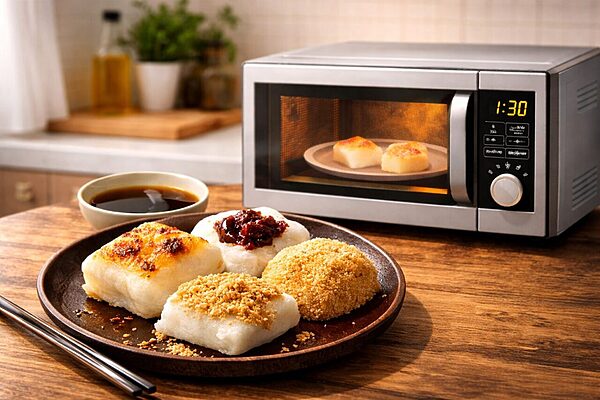
Mochi is often introduced as a Japanese New Year food, but that description only tells part of the story.
In Japan, mochi is also a practical food. It keeps well, feels filling in small amounts, and can be grilled, simmered, or warmed in a microwave with very little preparation. It belongs to seasonal celebrations, but it also fits ordinary meals, snacks, and emergency food storage.
Outside Japan, mochi is understood in several different ways. Some people are fascinated by its stretchy, chewy texture. Some know it mainly as mochi ice cream. Others have seen news stories about mochi choking accidents and think of it as a dangerous New Year food.
This article explains what mochi is, why it feels filling, why it is easy to store, how it developed in Japanese food culture, how people eat it in Japan, and why foreign reactions to mochi can be so mixed.
Mochi is often described in Japan as a food that “sits in the stomach.” This does not mean it is unusually heavy in a mysterious way. The feeling comes from its density, texture, and how it is usually eaten.
Mochi is made from glutinous rice, also called sticky rice or mochigome in Japanese. The rice is steamed, pounded, and shaped into a smooth, elastic mass. Compared with a bowl of cooked rice, mochi contains less water by weight and has a much denser texture.
Cooked rice is soft and fluffy because it holds a lot of water. That water gives it volume.
Mochi, especially packaged kirimochi, or rectangular cut mochi, is more compact. Because it contains less water than freshly cooked rice, a small piece can feel more substantial than it looks.
This is one reason mochi is useful when someone wants a quick meal or snack that feels more satisfying than sweets, crackers, or a small piece of bread.
Mochi’s chewiness also affects how filling it feels.
Grilled mochi becomes crisp on the outside and soft inside. Simmered mochi absorbs broth and becomes tender, but it still has a distinctive pull. Because it is sticky and elastic, people naturally eat it more slowly than many other foods.
That slower eating pace can make mochi feel more satisfying. The texture asks for attention.
Not everyone experiences mochi the same way. Some people find it very filling, while others feel hungry again sooner than expected.
The difference often comes from how it is eaten. Mochi eaten by itself with sugar, kinako soybean flour, or a sweet topping is different from mochi served with soup, vegetables, egg, seaweed, or other side dishes.
As a meal, mochi works best when it is paired with other foods. A bowl of soup with mochi can feel more balanced than plain grilled mochi eaten alone.
Another reason mochi has remained useful in Japan is that it can be stored more easily than many fresh foods.
It is important to separate fresh mochi from modern packaged mochi. Freshly pounded mochi can spoil or grow mold if handled carelessly. Packaged cut mochi, on the other hand, is made for storage and everyday convenience.
Kirimochi, the rectangular cut mochi commonly sold in Japanese supermarkets, is one of the easiest forms to use.
Many products are individually wrapped and can be stored at room temperature until opened. They do not need to be washed like rice or sliced like bread. They can be grilled, toasted, simmered, or microwaved.
After opening, however, mochi should be handled carefully. Moisture and mold are the main concerns, so it is best to follow the storage instructions on the package.
Historically, mochi also had value as a processed rice food.
Freshly cooked rice contains a lot of water and does not keep well for long periods. By steaming sticky rice, pounding it, shaping it, and sometimes drying it, people could create a food that was easier to carry, store, and prepare later.
This does not mean old-fashioned mochi had the same shelf life as modern sealed products. But it does show that mochi grew from practical food knowledge, not only from ceremony.
Mochi can also fit emergency food storage when the product is shelf-stable and easy to prepare.
It is compact, filling, and can be cooked in several ways depending on what tools are available. A microwave, hot water, a frying pan, or a toaster can all be enough, depending on the type of mochi.
This makes mochi suitable for rolling stock, where a household keeps food on hand, eats it in daily life, and replaces it before it expires.
The origin of mochi cannot be reduced to one exact date.
Mochi developed in a culture where rice became central to daily life, agriculture, seasonal rituals, and celebrations. As rice cultivation spread and became deeply rooted in Japan, people found many ways to process and use rice. Mochi was one of the most important.
Mochi is made by steaming sticky rice and pounding it until the grains become a smooth, elastic mass.
This process takes effort. But it transforms rice into something very different from an ordinary bowl of rice. Mochi can be grilled until fragrant, simmered in soup, dried for storage, or shaped for ceremonies.
In that sense, mochi is not only a festive food. It is also a form of food technology: a way of giving rice new texture, meaning, and usefulness.
Mochitsuki, the traditional pounding of mochi with a wooden mallet and mortar, was not an ordinary one-person kitchen task.
It required preparation, timing, and often several people working together. The rice had to be steamed, pounded rhythmically, turned by hand, shaped, and shared.
Because of this, mochitsuki naturally became connected with year-end gatherings, New Year preparations, local events, and celebrations. For visitors to Japan, watching or joining mochitsuki can be memorable because the making of the food is itself a cultural experience.
Mochi became closely tied to moments of transition.
Kagami mochi, the round New Year mochi offering, and ozoni, a New Year soup with mochi, are well-known examples. Mochi appears at times when people mark a new year, a harvest, a family event, or a formal celebration.
Rice has long carried special importance in Japan, and mochi is rice transformed through labor. That transformation helped give mochi symbolic weight.
Mochi is strongly associated with Japan, but foods made from sticky rice, rice flour, or pounded rice exist across East and Southeast Asia.
The better question is not whether mochi is “only Japanese,” but what makes Japanese mochi distinctive.
China, Korea, Vietnam, and several Southeast Asian cultures have foods that resemble mochi in texture, ingredient, or method.
Some are sweet. Some are used in soups or stir-fries. Some appear in festival foods. They are not identical to Japanese mochi, but they share a broader cultural interest in rice, stickiness, chewiness, and celebration.
So, mochi-like foods are not exclusive to Japan. Japanese mochi is one branch of a wider rice-based food culture.
What makes Japanese mochi distinctive is its range.
It can be ceremonial, as in kagami mochi. It can be seasonal, as in New Year ozoni. It can be a snack, a quick breakfast, a topping for soup, or a stored food kept at home.
This balance between the special and the practical is one of the most Japanese aspects of mochi.
For a broader look at the foundations of Japanese meals, dashi, a Japanese soup stock rich in umami, helps explain why simple ingredients can carry deep flavor and cultural meaning.
Outside Japan, the word “mochi” often brings to mind sweets rather than grilled mochi or New Year soup.
In the United States and parts of Europe, many people first encounter mochi as mochi ice cream: small balls of ice cream wrapped in a thin, chewy rice dough. This has made the word familiar, but it has also shifted the image of mochi toward dessert.
Japanese mochi and overseas mochi sweets overlap, but they are not the same cultural object.
Japanese mochi can be eaten in many ways.
It can be grilled, simmered, sweetened, wrapped in seaweed, served in soup, added to hot pots, or used in desserts. Its flavor is mild, so the surrounding ingredients decide whether it feels like a meal, snack, or sweet.
Grilled mochi is one of the simplest ways to eat it.
When heated, mochi puffs, softens, and stretches. It can be dipped in soy sauce and wrapped in nori seaweed, eaten with sugar soy sauce, dusted with kinako roasted soybean flour, or paired with grated daikon.
In ozoni, mochi is served in soup with vegetables and other ingredients. The broth and ingredients differ by region and household, which makes ozoni one of the most personal New Year dishes in Japan.
Mochi culture is not uniform across Japan.
Some regions use round mochi, while others use rectangular mochi. Some families grill mochi before adding it to soup, while others simmer it directly. Some ozoni uses clear broth; some uses miso.
Even within the same region, family habits can differ. For many people, mochi is tied not just to Japan as a whole, but to the memory of a particular household table.
Today, mochi can be prepared with very little effort.
A piece of packaged mochi can be heated in a microwave with a small amount of water, then eaten with soup mix, soy sauce, seaweed, chocolate spread, jam, or other toppings.
These modern shortcuts do not make mochi less Japanese. They show how flexible it is. Mochi survives because it can be ceremonial and casual at the same time.
Foreign reactions to mochi are often divided.
Some people love the chewy texture immediately. Some find it strange. Some know mochi only as a dessert. Others are surprised to learn that mochi can be savory, ceremonial, or even dangerous if eaten carelessly.
For many first-time eaters, the texture is the main surprise.
Mochi stretches, resists the bite, and feels soft and dense at the same time. It is not like bread, cake, noodles, or ordinary rice.
Sweet forms such as daifuku, which wraps red bean paste or fruit in soft mochi, are often easier for newcomers to understand. They fit the familiar category of dessert.
Savory mochi can be more surprising.
Someone who knows mochi only as ice cream or a sweet may not expect it to appear in soup, with soy sauce, or wrapped in seaweed. In Japan, mochi can be sweet or savory, festive or plain, elegant or quick.
That range is part of its appeal, but it can also make mochi harder to explain in one sentence.
Mochitsuki often attracts attention because it is visual, physical, and communal.
The rice changes in front of people’s eyes. The rhythm of pounding, turning, and shaping makes the process feel festive. Even someone who does not know much about Japanese food can understand that this is more than a recipe.
Mochitsuki shows that mochi is not only something to eat. It is something people make together.
For many people outside Japan, mochi is most familiar as a sweet.
Mochi ice cream, daifuku, fruit mochi, and other soft sweets have helped the word mochi spread internationally. This popularity is real, but it is not the same as the spread of traditional Japanese mochi meals.
Mochi ice cream is small, colorful, and easy to eat.
The chewy outer layer creates contrast with the cold ice cream inside. It also comes in familiar flavors, such as vanilla, chocolate, strawberry, matcha, mango, or cookies and cream.
This makes mochi ice cream approachable even for people who have never eaten ozoni or grilled mochi.
Daifuku and fruit mochi are also easy to introduce overseas because they are clearly sweets.
They may contain red bean paste, strawberries, cream, or fruit. The mochi layer becomes a soft wrapper rather than the entire meal.
The way Japanese foods are reinterpreted overseas can also be seen in the culture of tofu in Japan, where an ingredient carries different meanings in Japan and abroad.
In Japan, mochi can be a main component of a meal, a New Year food, a preserved food, a snack, or a sweet.
Overseas, mochi is often understood mainly as a dessert texture. This does not make the overseas version wrong. It shows how foods change when they enter another culture.
The word mochi now carries more than one meaning.
Mochi has another international image: the dangerous New Year food.
When choking accidents are reported in Japan, especially around New Year, foreign media sometimes describe mochi in dramatic terms. The phrase “silent killer” can appear because mochi is sticky, dense, and risky if swallowed in large pieces.
Mochi’s texture is exactly what makes it enjoyable and risky.
It is soft, elastic, and sticky. If a large piece is swallowed without enough chewing, it can become difficult to swallow safely. This is especially important for older people, young children, and anyone with difficulty chewing or swallowing.
The risk is not a reason to treat mochi as forbidden. It is a reason to understand how to eat it.
Mochi accidents are often reported around New Year because more people eat mochi during that period.
From outside Japan, the contrast can be striking: a beloved festive food that also appears in emergency warnings. This contrast is one reason mochi receives mixed foreign reactions.
Mochi can be seen as delicious, fun, strange, beautiful, and dangerous, depending on the context.
The basic precautions are simple.
Cut mochi into small pieces. Chew well. Do not rush. Be especially careful when serving mochi to older adults or children. Even mochi in soup should be treated carefully because softness does not remove its stickiness.
Mochi should be eaten with awareness, not fear.
People sometimes want to bring mochi overseas as a souvenir, but food import rules vary by country.
Packaged mochi may be allowed in some places and restricted in others. The answer depends on the destination, ingredients, packaging, and customs or quarantine rules.
Even commercially packaged kirimochi can be treated differently depending on the country.
Some destinations may allow sealed rice products. Others may restrict certain agricultural or processed foods. Because rules can change, travelers should check official customs and quarantine information before departure.
Mochi that contains fillings can be more complicated.
Products with red bean paste, cream, dairy ingredients, meat-related ingredients, or other additives may be treated differently from plain cut mochi. Sometimes the filling, not the mochi itself, creates the issue.
For gifts, unopened products with clear ingredient labels are easier to explain if needed.
Food rules are not something to guess.
A small amount for personal use may still need to be declared. A product sold freely in Japan may not automatically be allowed elsewhere.
Mochi can be a thoughtful gift, but it should be carried responsibly.
Mochi is more than a New Year food.
It is filling, compact, flexible, and easy to keep at home. It can be part of a ceremony, a family soup, a quick breakfast, a sweet, or an emergency food shelf. Few foods move so easily between special occasions and ordinary life.
Overseas, mochi continues to change. It may appear as mochi ice cream, fruit daifuku, a cultural experience, a gluten-free curiosity, or a food that requires caution. Each version highlights a different part of mochi’s character.
In Japan, mochi remains powerful because it is both symbolic and practical. It carries the memory of rice, work, family, season, and storage. Like the phrases itadakimasu and gochisousama, mochi reminds us that Japanese food culture often connects everyday meals with gratitude, care, and shared time.
That is why mochi still feels alive in Japan: not only as a festive food, but as a quiet piece of everyday wisdom.
Mochi is a Japanese rice cake made from glutinous rice. The rice is steamed, pounded into a sticky, elastic texture, and shaped. It can be eaten grilled, simmered, sweetened, or used in desserts.
Mochi feels filling because it is dense, contains less water than cooked rice, and has a chewy texture that encourages slower eating. It feels more satisfying when paired with soup, vegetables, or other side dishes.
Mochi has a preserved-food aspect, especially when dried or sold as packaged kirimochi. Fresh mochi can spoil quickly, so storage depends on the type of mochi and how it is packaged.
No. Mochi-like rice cakes exist in China, Korea, Vietnam, and other parts of Asia. Japanese mochi is distinctive because of its connection to New Year, celebration, household meals, and everyday convenience.
Yes, but often as a sweet. Mochi ice cream, daifuku, and fruit mochi are widely recognized in many countries. Traditional grilled mochi or ozoni may be less familiar outside Japan.
Mochi is sometimes described this way overseas because its sticky texture can cause choking if eaten in large pieces or swallowed too quickly. The risk is higher for older adults, children, and people with swallowing difficulties.
Cut mochi into small pieces, chew carefully, and avoid rushing. Be especially careful when serving it to children or older adults. Soup does not remove the need for caution.
It depends on the destination country and the product. Plain packaged mochi may be allowed in some places, while filled or dairy-containing products may face restrictions. Always check official customs and quarantine rules before traveling.